Summary
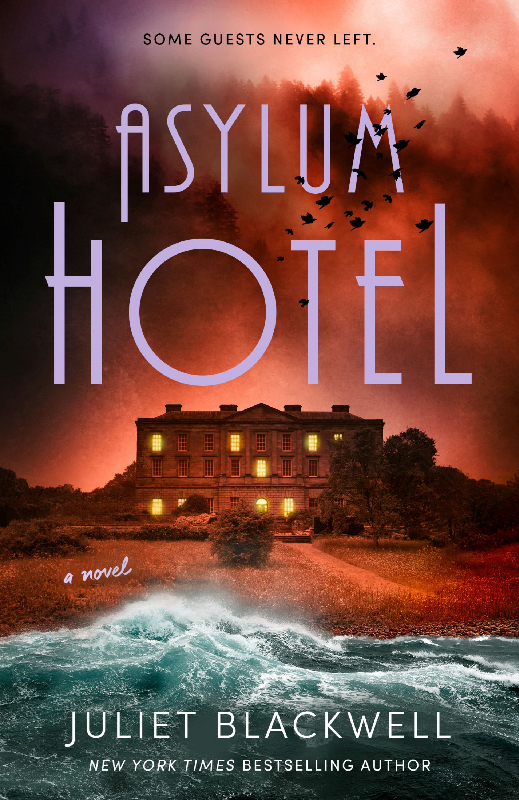
Aubrey Spencer loves photographing classic old buildings and abandoned places that hold old secrets. The Hotel Seabrink, perched overlooking the sea, is one such place. Currently abandoned but scheduled for a major renovation, it has a torrid history. Back in the 1920s it hosted A-list celebrity clientele, and now the locals insist it is haunted by the ghosts of two young women who died there. When Aubrey goes to photograph the site before the renovation begins, she bumps into a man named Dimitri Petroff, a minor online celebrity who shares her fascination with old buildings, the Hotel Seabrink in particular.
When he is found dead the next day at the base of a cliff, the police are quick to close the investigation. But Aubrey feels unsettled by locals who claim he was murdered and that it’s not the first time someone interested in the hotel was killed. As she digs deeper into the property’s dark history (and its origins as an asylum) as well as Dimitri’s professional rivalries, she becomes mired in an unsolved murder case from several decades earlier, one with eerie parallels to the contemporary case. But someone is determined to keep her from discovering the truth—at any cost.
Review
99 mystery 1 percent paranormal. Not horror genre at all. Barely scraping into the cozy mystery category. Ok post reading edit: other than
Summary
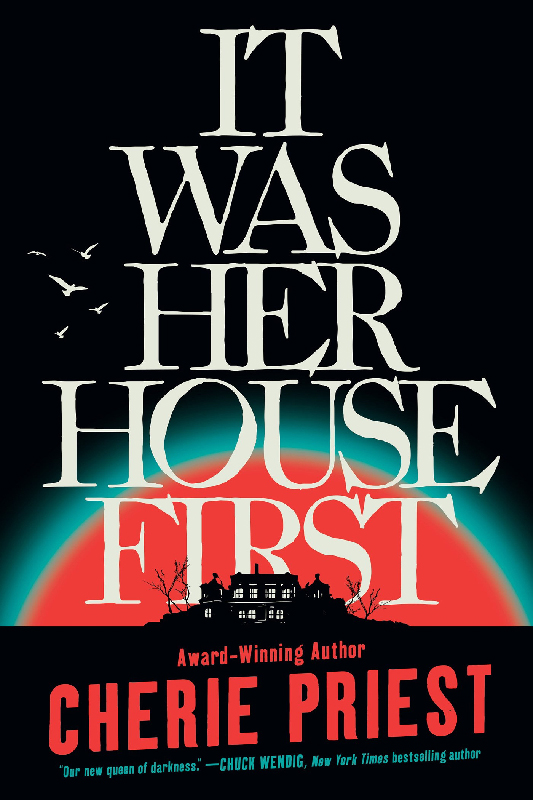
Ronnie doesn't know it yet, but her fate rests in the hands of the dead. Silent film star Venita Rost's malevolent spirit lurks spider-like in her cliffside mansion, a once-beautiful home that's claimed countless unlucky souls. And she's not alone. Snared in her terrible web, Inspector Bartholomew Sloan—her eternal nemesis—watches her wreak havoc in helpless horror, shackled by his own guilt and Venita's unrelenting wrath. Now the house has yet another new owner. This time it's Ronnie Mitchell, a grieving woman who buys the run-down place sight unseen. She arrives armed with an unexpected inheritance, a strong background in renovation, and a blissful ignorance regarding the house's blood-soaked history. But her arrival has stirred up more than just dust and decay. In the shadows, unseen eyes watch. Then, a man comes knocking. He brings wild stories and a thinly veiled jealousy, as well as a secret connection to the house that can only lead to violence. Venita's fury awakens, and a deadly game unfolds. Caught between a vengeful ghost and a ruthless living threat, Ronnie's skepticism crumbles. The line between living and dead isn't as sharp as it seems, and she realizes too late that in Venita's house, survival might be just an illusion.
Review
Sighs. Extended silence. Another sigh. Longer more uncomfortable silence. So. This book.
More long silence.
I'm still pissed about Priest's horribly racist Fathom novel that I read this month as well. I guess I have to say something here. Ok.
As per usual good writing, cool ghosts, fuck yeah women's wrongs!, who doesn't love a haunted house, occult going wrong? whodathunk!, women leads in horror, paranormal is cool.
Ok bye. *closes door more loudly and forcefully than needed*.
Everyone thinks so, I bet…before they sign such a contract. It’s the last bit of self-convincing we require to push ourselves over the line; it’s how we justify taking the things we want, through means which are frankly unholy. We tell ourselves, “My soul will be redeemed. My actions for good will overtake my singular action for evil.” But only the worst of us truly believe it. I know I did.

Summary
a story of a weird thing in a jar that maybe a monster idk. I can't find a summary that isn't just other authors or editors sucking this author's dick.
Review
I like this because it feels like an exam. I wrote the previous more than a month ago and have no idea what it means. Alright.
Ok neat bit of writing. Felt complete, like it could stand alone and wasn't missing or excised from a larger work. Kinda fell into tedious horror genre tropes that involved anti indigenous racism. I got no complaints or comments.
Summary
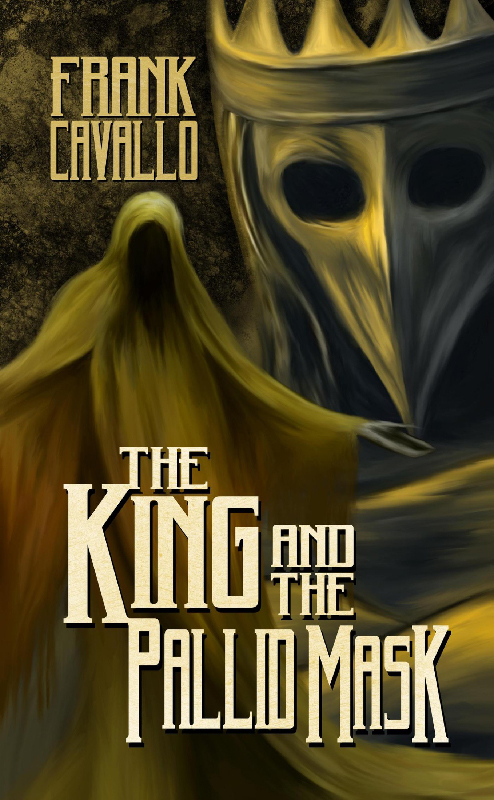
Kyle Hawkes has made a career chasing ghosts on camera, exploring haunted ruins and unraveling old legends. But when an unaired episode of his paranormal series leaks online, it triggers a chain reaction that unearths a scandal the Vatican buried decades ago.
From the alleys of London to the catacombs beneath Rome, Kyle and his partner Ella are hunted by a ruthless cabal obsessed with summoning the King in Yellow. Their only hope lies in tracking down Father Zacharias, a long-missing exorcist who once stood before the Masked God—and lost his mind.
As myth bleeds into reality and reason yields to terror, they must confront an ancient power whose secrets offer unspeakable power… and utter madness.
Review
King in Yellow meets action horror interspersed with [imo] funny bits of splatterpunk. Or, at least, egregious scenes of violence and torture. Not sorry, but most torture scenes are just funny-dumb to me.
This is a Dan Brown type plot. I've never read Brown's works, but I gleaned enough via pop culture complaints to know this is a Dan Brown plot. Very white cishet special boy main character, the supporting sad pathetic woman love interest, and a lot of supernatural action. It was fun, don't take it the wrong way. But it's a b movie kind of plot. Stupid but enjoyable. Pop some corn and settle in. I enjoyed most of it.
Action and adventure genre meets horror genre. Not a bad time if you can stomach to tortureporn. Yeah I'd recommend this novel. The author? I don't know. I haven't read anything else by them to say.
But it isn’t mindless. Oh no, hidden among those far reaches, there is such strange intelligence. A myriad of sentience so alien and beyond our perceptions that we can barely recognize it as such.
Summary
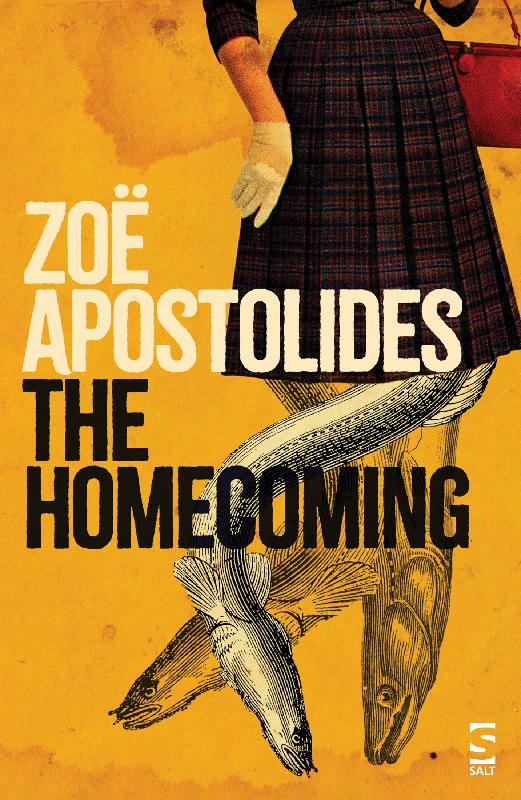
The Homecoming is Zoë Apostolides's debut novel. Quietly disturbing, it tells the story of Ellen, a young ghost-writer sent to record the memoirs of an elderly woman living in a remote Northumberland manor. Elver House is dilapidated, its faded beauty fading to ruin.The assignment seems simple enough. Ellen will spend a week conducting interviews at the wild and sprawling estate – far from the quaint country cottage she had imagined – before returning to London to write Miss Carey's autobiography. She digs deeper into its history, its lore and mystique and its occupant's increasingly bizarre behaviour. Clearly it isn't just the past that's haunting Miss Carey. And in unravelling the tangled threads of the older woman's story, Ellen too must confront more about herself than she bargained for.Part mystery, part ghost story, this is a story about isolation, memory, spirits and secrets, intergenerational friendship and motherhood.
Review
More suspense with Gothic and horror themes. Sober. Empathetic. Certainly came through with the paranormal aspect. Don't read expecting the usual haunted house tropes. More like the summary says exploration of grief motherhood obligations and so forth. Very good book if entered with the right intention.
Beside it a stray patch of foxgloves stood in upright formation, their tubular bells flamingo-pink despite the onset of autumn. Years ago now, a botanist client had explained the meaning of the name, how foxes were said to silence their steps with the petals, how they slipped them over their paws to hunt. And by ringing the bells of the flowers, they can also warn their comrades of danger, she’d said. Of course, foxgloves are horrifically toxic: a form of self-protection, and a warning to unwanted visitors.
Summary
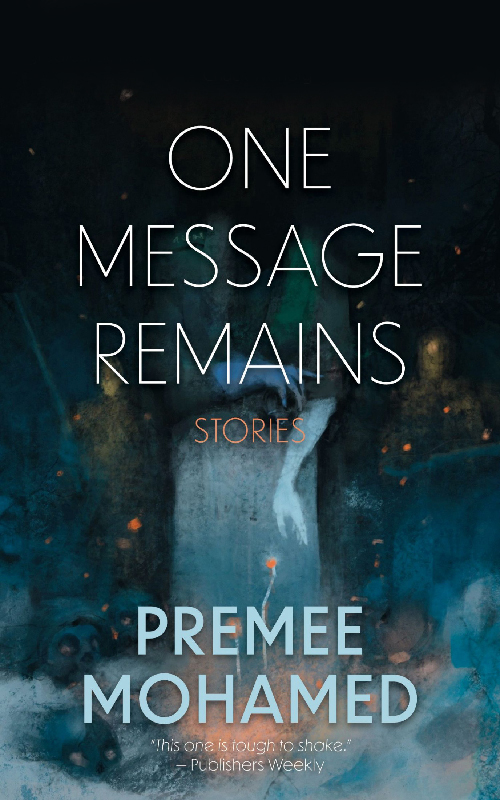
Award-winning author Premee Mohamed presents three brand new stories set in this morally ambiguous world of war and magic.
In "One Message Remains," Major Lyell Tzajos leads his team on a charity mission through the post-armistice world of East Seudast, exhuming the bones and souls of dead foes for repatriation. But the buried fighters may have one more fight left in them—and they have chosen their weapons well.
In "The Weight of What is Hollow," Taya is the latest apprentice of a long-honored tradition: building the bone-gallows for prisoners of war. But her very first commission will pit her skills against both her family and her oppressor.
Finally, in "Forsaking All Others," ex-soldier Rostyn must travel the little-known ways by night to avoid his pursuers, for desertion is punishable by death. As he flees to the hoped-for sanctuary of his grandmother's village, he is joined by a fellow deserter—and, it seems, the truth of a myth older than the land itself.
Review
Mohamed, are you a baseball star? Because you are consistently knocking things out of the PARK, baby!! Usually I say something like 'if you like the author, you'll like this anthology. And if you never read them before, this is a good introduction'. Yes to the first half, maybe to the second. Specifically because this isn't quite a short story anthology.
The first story is not quite a novella in its own right, while the succeeding stories are short stories. If you want something small and digestible as a entry point as a new reader into this author, probably try 'No One Will Come Back for Us' anthology or one of Mohamed's novel(las). [I suggest These Lifeless Things for a novella]
Anyways. This anthology. Mohamed touches on many deep, heavy topics, but manages a graceful balance between dwelling on misery and a bleak lined hopefulness. There's a good variety in worldsetting and topics, so if you don't care for one story, another will satisfy you.
Also, I won't trash other authors in book reviews not about their books, but um. R F Kuang wishes to have the restraint and tact shown in One Message Remains. Ok bye.
Ok not bye. One Message Remains is about colonization and its effects on rural indigenous villages / towns shown from the pov of a colonizer. It has more tact and restrain, and does not beat you over the head about how bad colonizers / colonization is like Kuang can't help but do in most if not all their works. OK BYE NOW.
◆ One Message Remains
Major
◆ The Weight of What Is Hollow
Major
◆ Forsaking All Others
Major
◆ The General’s Turn
Medium
I am filled with the voices of the dead, I am filled with their words. They are crowding out my own. I see their memories, their last moments. Nothing that made it into the pitiful notebooks buried in the thick wet clay. I am the hated vessel of their last words. They are alive in me and I don’t know what they want or what they will do.
Summary
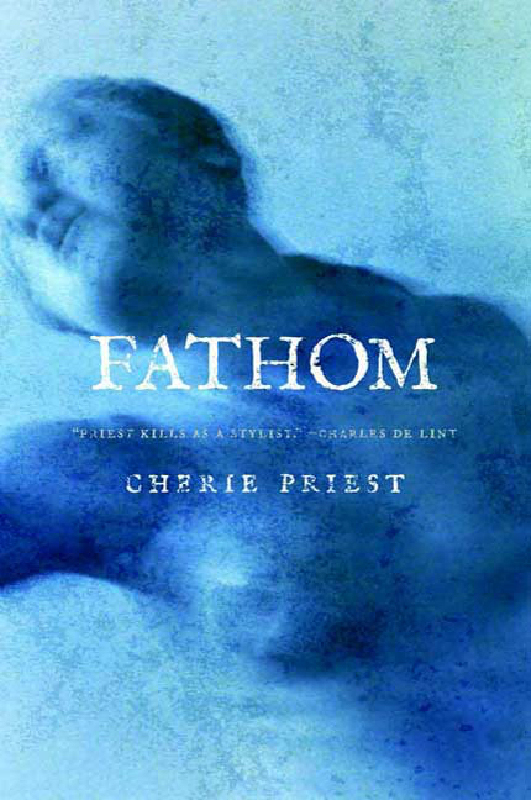
Before God created the earth as we know it, the planet was home to a race of monsters. In order to prepare for humans, He either banished or killed most of these natives creatures; but those who remain in exile have not forgotten. One ancient tale encourages their vengeance, speaking of an angel with the power to wipe out a quarter of the world's population. Together, the old ones form a plot to catch this being and use him to reassert their reign.
But not every prophecy is a promise.
Scattered throughout the globe a handful of unwilling heroes are preparing to intervene. One of these sits frozen in stone, mistaken for a statue and abandoned in a courtyard for eighty years. Though Nia finds it difficult to believe, that strange prison was her rescue--a cocoon that transformed and protected her until her story could truly begin.
Fathom is an unapologetic mix of horror and urban fantasy that will appeal to fans of both genres. The resulting book is a sexy biblical monster story that will hold the attention of readers who appreciate a good fairy tale with an unusual point of view.
Review
You ever see those absolutely wild videos of someone's very run down apartment, and they're doing something like touching their house key to their front door knob? But they do it a couple times and you notice electric arcing / sparks sometimes when the key gets close to the metal knob?
That's this book. The relief of being home away from work to look at good computer and eat food and fart without your coworkers dying of your ass blasts. Except your sparky doorknob is going to zap your heart one day and you will die, pants full of shit and piss, on your front step.
Wild, fantastic plot. Excellent characterization. Amazing writing. It's just that overt antiblack racism and colorism pops up constantly. Which is bizarre. The author can imagine and conceptualize fantastical ideas. So why the racism? Why the colorism? What is impossible about choosing to portray evil versus good that does not involve evil 'blue-black skin' monster women and 60% of the time helpless fragile lightskinned [not outright white] women?
So why this?
▪ Once she’d been brown from a life in the sun; now she was so pallid and white that she looked nearly gray—and it wasn’t just from dust left over from her shell. The texture of her body had changed from ordinary skin with fine hairs and creases at the corners to something milky and matte, with veins that crept just barely beneath the surface. “Marble,” she murmured, because that was what it made her think of. There was a bank in Tallahassee with floors that were creamy and gray, with streaks of blue-purple cutting through the pale like lightning.
THEY STOLE HER MELANIN. AUTHOR, WHY?
▪ came from the islands. Sometimes her grandmother had hired them to work the orchards, and she’d seen them there—climbing up ladders in their thin cotton pants, their exposed skin dark and shiny with sweat. Some of them shaved their heads until nothing remained but a shadow; and some let it grow long and kinked, rolled into natty tendrils that looked like the roots of a tree, or like cords of braided rope.
That’s what it felt like, when she crushed a fistful of hair in her palm. It felt springy and strong, and the color was strange too—redder, golder, and even whiter, in strips and streaks, than it had been before.
Yeah idk about this. Describing textured hair like rope or plants? Maybe it'd be questionable if this was the only instance, but it's not. Combined with constant colorism and racism, this is just another symptom. The thing that really gets me is that despite having her brown skin stripped from her is that she still has distinctly kinky, textured hair. It just screams 'you can be assimilated into one of The Good Ones but you'll never be one of us'.
▪ But the water woman’s shape, with her seaweed hair and her blue-black skin shining under the stars....
Colorism, non human traits, evil dark-skinned woman. Hm that's as subtle as Sisyphus's boulder coming down the hill at you.
The writing is coherent, plot interesting, characters good. You could read it if you like the summary. But then again...
The summary: "Before God created the earth as we know it, the planet was home to a race of monsters. In order to prepare for humans, He either banished or killed most of these natives creatures; but those who remain in exile have not forgotten. One ancient tale encourages their vengeance, speaking of an angel with the power to wipe out a quarter of the world's population. Together, the old ones form a plot to catch this being and use him to reassert their reign."
So earth was colonized by [most likely white christian] God, and the indigenous population [most likely dark-skinned people, if the main antagonist is anything to go by] wants their Land Back. And they [God?] transform a brown skinned young woman of color into a white skinned woman to stop the evil black skinned savage from taking her Land Back.
Oh also one of the servants to the evil dark skinned woman is a
It's a mess. Why was this published? Oh, 2007? That's no excuse. I thought this racist eugenics colonizing propaganda was published in, idk, 1940/50. I've read a fair amount of Priest's works before this one. I'm not sure I ever want to read anything else from her.
fuck you
Summary
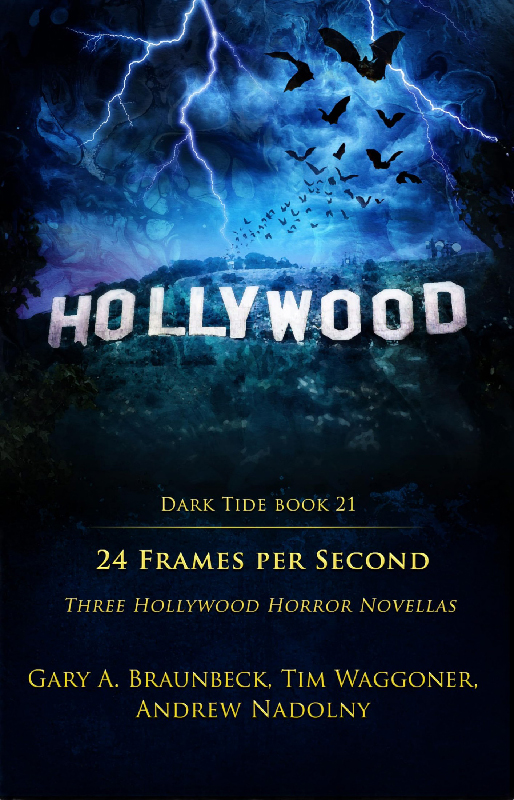
Step into the terrifying world of Hollywood horror, where the line between fiction and reality blurs, and the consequences of cinematic creation become all too real. In 24 Frames Per Second, three chilling novellas bring to life the darkest corners of the movie industry—where horror isn’t just confined to the screen.
"The Last Zombie Movie" by Tim Waggoner: A group of student filmmakers embark on a project to create a zombie holocaust script—but soon, their fictional nightmare begins to unfold in real life. As their imagined horrors come to life, they must face the terrifying reality of their own creation.
"I Am the Rainbringer" by Andrew Nadolny: A woman is transformed into a serial killer by her father’s dying wish, and her husband turns her deadly past into a movie. But the ghosts of his parents—and her brutal history—soon rise to haunt them both, blurring the line between the living and the dead in a nightmare that can’t be escaped.
"This Is Not My Movie" by Gary A. Braunbeck: After a movie theater is consumed by fire, the charred ruins become a nexus for ghosts and alternate realities. A haunting tale of how a beloved movie theater's destruction births a dark, sentient force, trapping the souls of those killed in the blaze.
In 24 Frames Per Second, horror reaches beyond the screen and becomes part of the fabric of reality, where the true cost of creation is more horrifying than any fictional tale. Each novella is a unique exploration of terror, art, and the boundaries of reality, set against the backdrop of Hollywood’s darkest secrets.
Review
Presses lips together to keep from laughing my head off. More grimdark white cishet shit. Well written. I'm not the audience. Not so much cursed film a la Files's Experimental Film and more splatterpunk literary horror over the top grimdark type shit. For example
If you like splatterpunk I guess you'd like this themed anthology. Some stories go more philosophical then spaltterpunk, though. Don't expect a full on 'turn your brain off and enjoy the fake blood' splatterpunk novella anthology.
◆ The Last Cannibal Movie
Major
Medium
Minor
◆ This Is Not My Movie
Major
Medium
That’s the beautiful thing about being on the receiving end of someone else’s madness; you become a damn god in their world. Then you learn there’s nothing humans love more than defiling and desecrating their gods.
Summary
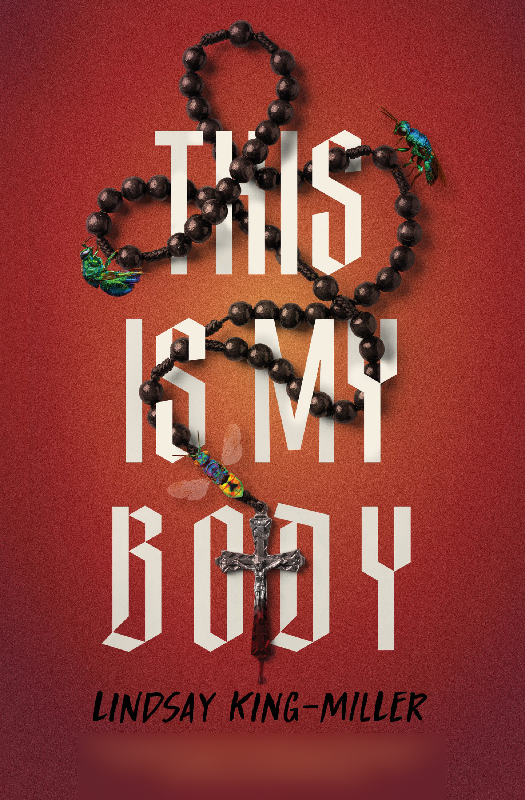
A gripping, emotional, and darkly funny lesbian novel about family trauma and possession.
Gay single mom Brigid always thought that cutting ties with her extremist Catholic family was the best thing she could have done for her daughter, Dylan—and for herself. But when Dylan starts having terrifying fits of unnatural violence, Brigid can’t shake her memories of a girl from her childhood who behaved the same way until Brigid’s uncle, Father Angus, performed an exorcism.
Convinced that her daughter is suffering from demonic possession, Brigid does the thing she told herself she’d never do: she goes home. Father Angus is the worst person she knows, but he’s also the only person who can help her daughter.
But as Brigid starts to uncover secrets about Father Angus, that long-ago exorcism, and her family’s past, she realizes that she and Dylan have never been in more danger.
This Is My Body is a piercing journey into religious trauma and childhood shame, building towards a heart-pounding twisty climax that will spin your head all the way around.
Review
What has been in the water lately, or very not lately, that has brought a crop of generational abuse themed horror novels? Or maybe it's just me, maybe I'm just seeking them out because a) I want to read more women authors and b) it's transfixing. Or maybe cathartic would be better. Forgiveness and acknowledgement of abuse never happens. Not in the ways survivors of abuse dream of. So to see that in fiction is a appealing way to achieve that. And this book does that.
Much like the novella Tantrum by Rachel Eve Moulton, this is about generational abuse and religious abuse. And man, isn't it great when horror is like '
The only disappointing thing is that the author doesn't have any other novels out. Yet. I really want more horror featuring lesbians.
This was what she wanted, the clash of tongue and teeth, sweat and heavy breathing, hands under clothes, fingernails and hidden skin. She wanted to be all body, no thought. To crash against Zandy like the sea against stones, shattered by her own violence, transformed into foam, carried away on the wind.
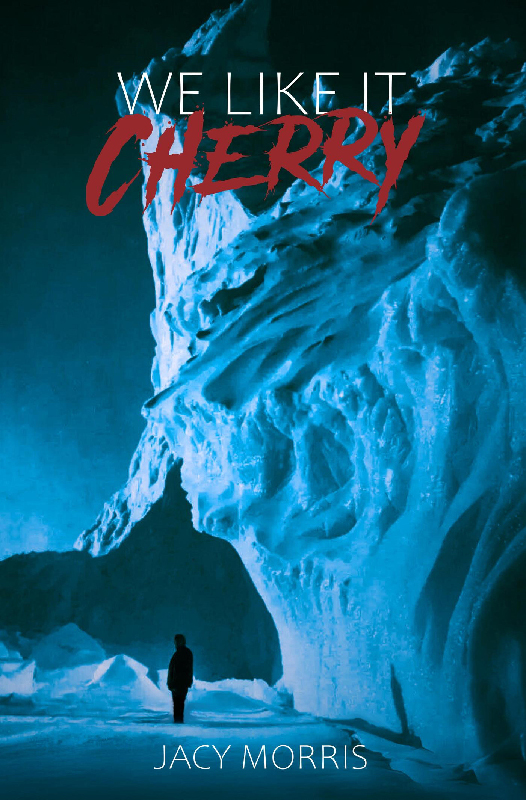
Summary
Documentarist Ezra Montbanc thinks he's hit the jackpot when he receives an invitation to document the rites of a mysterious, hitherto unknown tribe: the Winoquin, who reside in the harrowing, inhospitable Arctic.
It's a shot at the prestigious journalism career he's long envisioned, and a path out from the borderline-exploitative series detailing the celebrations of Indigenous tribes he's been mired in with his life and filmmaking partner, Stu.
Buzzing with possibility, Ezra and his crew depart for the home of the Winoquin, only to find themselves in a frozen and bloody battle for survival atop an inaccessible glacier ritual site, where men and mythical horrors hunger for sacrifice.
Review
It's probably in General Fiction or Literary Fiction, so I simply don't encounter it. But the perspective of diaspora offspring isn't one I ever recall seeing. Much less and particularly in horror. A neutral statement: much indigenous horror fiction from indigenous authors that I have read does have indigenous characters wanting to have a relationship with their respective ancestors. So it's interesting to see a sort of diaspora child of color feel a disconnect from their culture and not feel too conflicted about it. No, they're not thrilled or neutrally fine with it. But they have questions about how they can or should connect to what their culture should be, versus what it truly was, pre colonization. And it's just nice to see that addressed in fiction.
This novel tackles a lot of horror tropes involving indigenous racism and colonization. I won't pretend to have indigenous perspective, just a perspective of color. Societies of color weren't pre colonization utopias. But we weren't the uncivilized savages that colonizers made us out to be [in order to genocide us into submission to European ideals]. And yeah, there's something to be said of an
It's a beautifully written book and I am desperately waiting for the author's next art to be published.
ps I give props to the author for having a unique easily searchable title.
But that’s the problem with being submerged in icy water—it gets into your bones, won’t let up, almost as if the ocean itself was crying out for your return. Isn’t that what scientists thought? That at some point or other, all life had crawled from the ocean. The ocean resented this fact, like a mother whose child grew up to abandon and ignore her. When people returned to the ocean, mother wanted to lock the door, keep her children from ever going outside again, and even if they escaped, the cold was still there, still working its way through their bones, through their muscles and fat.
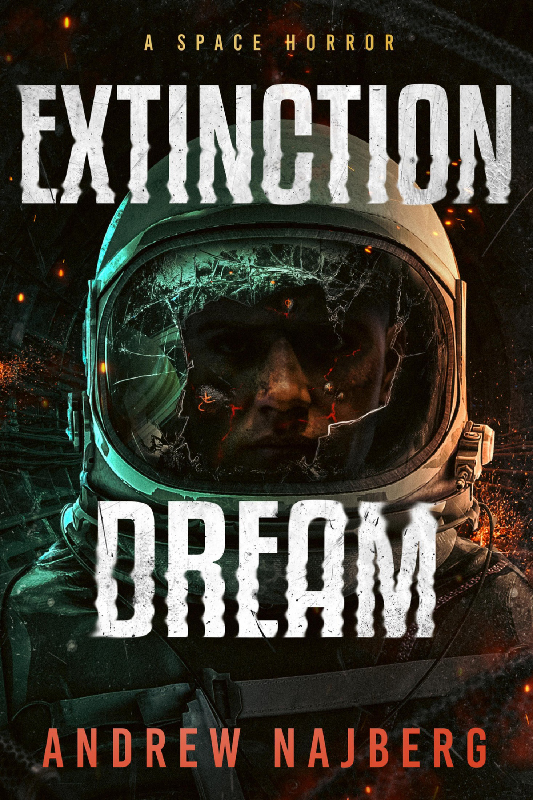
Summary
Deployed in orbit to what he first believed to be a simple research station, a soldier named Markus is a member of a squad defending Earth on the front line of a secret war against an alien enemy that attacks telepathically, using our nightmares as weapons. They don't know what the enemy looks like or even why they are attacking.
What they do know is that Earth is losing.
As they sink further into their deepest terrors, they believe they may finally have the chance to take the fight to their enemy – if the hell they're living in doesn't cause them to tear each other apart first.
Review
I always cringe when I see military in novels. 100 percent of the time it's wish fulfilment, Call Of Duty Vidya Gaem propaganda. This isn't exactly that, but if only because I think every depiction of the military in fictional environments is inherently propaganda. But a jacob geller video can probably explain that better. Rods from God isn't feasible, nor is brainwashing or torture. But military in plots will often show it, thus it's always military propaganda.
Now this book. While it too is propaganda, at least it's self aware that it is. It isn't OOH RAH, MURICA!, not always. There's some blissfully ignorant support of the military. Or, in the least, parents appreciative that their offspring have a job which contributes to their strained household income. See, it's a dystopia, by the way. Not just because the military exists but
The military is machine for pigs. Mc is a pig. Earth is also a pig. I'm not ripping off Amnesia: A Machine for Pigs plot, the military is just like that. Both fictionally and realistically. MC joins and is sent away to a space ship to be
But I digress before explaining the entire damn plot.
The finale. Satisfyi
The concept is really cool, as well. H
In the black, I still burn—but I realize it’s not heat. It’s a cold deeper than any I’ve ever imagined. The kind of cold that convinces you there will never be warmth again.
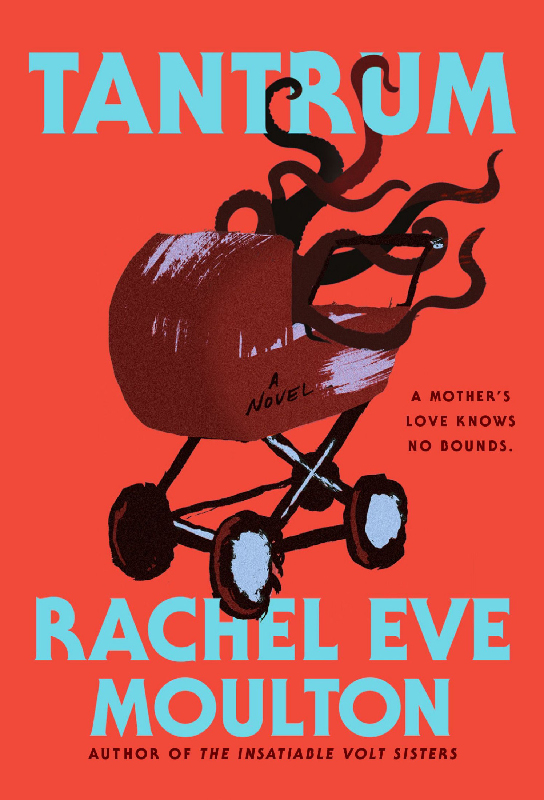
Summary
In this electric horror novel an exhausted mother thinks her newborn might be a monster. She’s right.
Thea’s third pregnancy was her easiest. She wasn’t consumed with anxiety about the baby. She wasn’t convinced it was going to be born green, or have a third eye, or have tentacles sprouting from its torso. Thea was fine. Her baby would be fine.
But when the nurses handed Lucia to her, Thea just knew. Her baby girl was a monster. Not only was Lucia born with a full set of teeth and a devilish glint in her eye, but she’s always hungry. Indiscriminately so. One day Lucia pointed at her baby brother, looked Thea dead in the eye and said, “I eat.”
Thea doesn’t know whether to be terrified or proud of her rapacious baby girl. And as Lucia starts growing faster and talking more, dark memories bubble to the surface–flashes from Thea’s childhood that won’t release their hooks from her heart. Lucia wants to eat the world. Thea might just let her.
Crackling with originality and dark humor, Rachel Eve Moulton’s Tantrum is a provocative exploration of familial debt, duty, and the darker side of motherhood.
Review
If you think this is a basic changeling baby monster story, one) WRONG and two) go read this book. This is what I love about horror. Yeah it's about a cycle of child abuse. But to defeat the cycle we need to literally devour the shame and trauma. And then spit it all back up because you realize you can't make your daughter do it for you. All while in a twisted fun house of fucked up architecture. There is such rage simmering beneath every word that the finale gives such unbelievable catharsis. Every one of Moulton's novels has been consistently amazing.
Once I realized a woman could be the source of the wrong, the evil, the world tilted in a way that made much more sense. I looked for her everywhere. Craved her. Made lists of her. Shows and movies always. God, I want that, I thought. Give me a bat and pigtails and call me powerful.
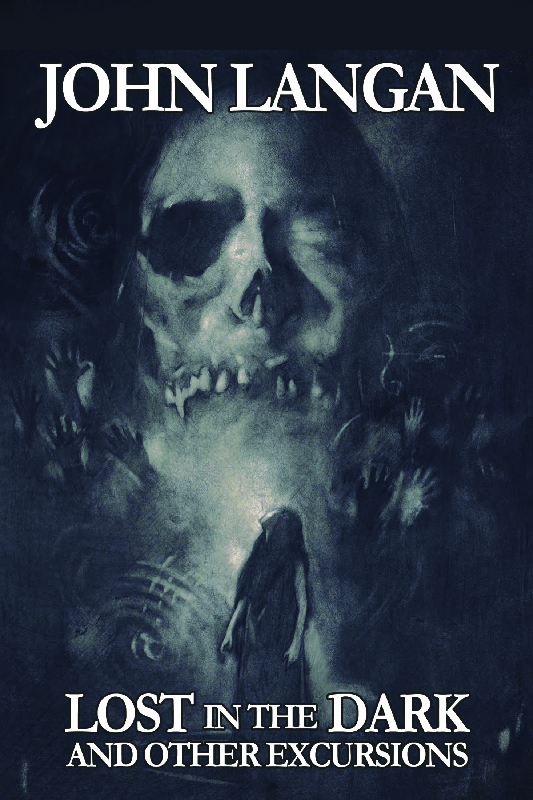
Summary
A garishly painted figurine contains a terrible curse; the ten-year anniversary of a sensational horror film shot in an abandoned mine reveals stunning secrets; endnotes for a book review uncover a strange high-tech pathogen; a man witnesses something uncanny and unexplained as his friend succumbs to a watery death; a seasick woman aboard a ferry is pursued by a barnacle-covered specter; a professor reveals the mysterious connection between Joseph Conrad and Peter Pan; a man encounters the ghost of his lost sister in a liminal space between the land and sea; an academic meets a mythical creature on a mysterious island.
John Langan, author of the Bram Stoker Award-winning novel The Fisherman, returns with thirteen new tales of cosmic horror in Lost in the Dark and Other Excursions. In these stories, he continues to chart the course of 21st century weird fiction, from the unfamiliar to the familial, the unfathomably distant to the intimate.
Madame Painte: For Sale
Lost in the Dark
My Father, Dr. Frankenstein
A Song Only Partially Heard
The Deep Sea Swell
Haak
Breakwater
Errata
Natalya, Queen of the Hungry Dogs
Oscar Returns from the Dead, Prophesizing
Alice's Rebellion
Snakebit, Or Why I (Continue to) Love Horror
Clapping Teeth and Driving Beats
Review
IT'S JOHNNY! Ok it's John. Langan, specifically. You know Langan. He released this short story anthology. It's pretty good. If you never read him before, this is a good introduction. If you already read him, then there's no need for me to suggest this anthology to you. Go read it or don't.
Major animal death, death, gore, murder, police, violence, blood, animal death, house fires, arson, body horror, snakes, death penalty, death, gore, wars, death, gore, death, gore, dementia, diseases, war crimes, nuclear, self harm, medical content, addiction, drowning, murder, infidelity, sexual content, guns, torture, cannibalism,
Medium animal death, asphyxiation, nuclear, genocide, ww2, parent death, sexual content,
Minor airplane crashes, experimentation, hanging, death, infidelity, sectioning, unsanitary,
◆ Madame Painte: For Sale
Major
Medium
Minor
◆ Lost in the Dark
Major
◆ My Father, Dr. Frankenstein
Major
Medium
Minor
◆ A Song Only Partially Heard
Major
◆ The Deep Sea Swell
Major
Medium
◆ Haak
Major torture, cannibalism,
Minor
◆ Breakwater
Major
◆ Natalya, Queen of the Hungry Dogs
Read this elsewhere, n/a
◆ Oscar Returns from the Dead, Prophesizing
Major
Minor
◆ Alice's Rebellion
Major
Minor
◆ Snakebit, Or Why I (Continue to) Love Horror
Major
Medium
It was—there are moments of strangeness, instances when some feature of your surroundings doesn’t make sense, and it puts a strain on everything else. You hear a voice in another room in a house you know is empty. You get out of bed in the middle of the night to have a pee, and there’s a shape moving on top of the dresser. You’re out walking the dogs, and you see a figure in the woods, watching you. Most of the time, these moments resolve. The voice you heard was a clock radio whose alarm turned on the radio. The shape in the bedroom is your reflection in the dresser mirror. The figure in the woods is the trunk of a tree in whose bark your brain picked out a face. You realize what’s actually happening—what was always happening—and the strain you felt relaxes.
—Sometimes, though, it doesn’t resolve.
Summary
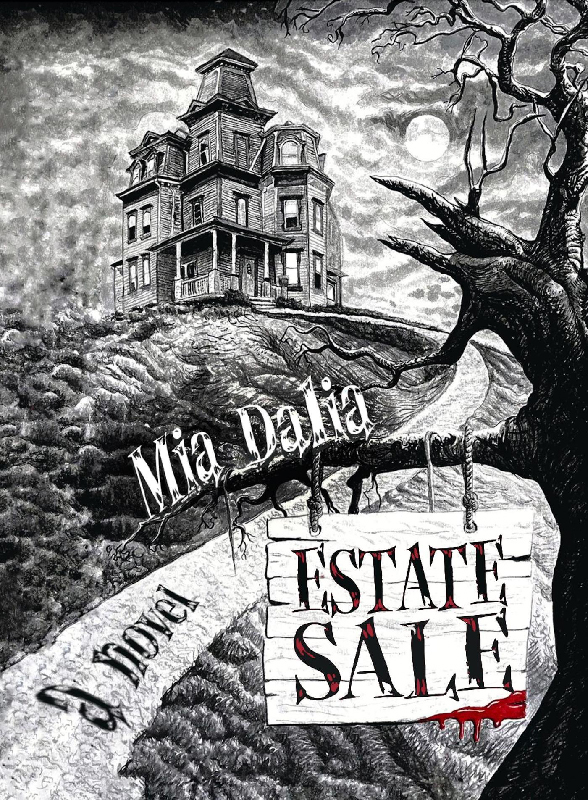
Every town has that house-the one on the hill, the one people whisper about. But what if the truth is far stranger than any tale ever told? When the enigmatic owner of the Koshmaroff estate dies, the doors of her crumbling mansion finally creak open. Locals swarm in, eager to sift through the relics of a reclusive life. But the estate sale proves more than they bargained for. Each trinket sold seems to carry a curse, and each buyer is soon caught in a waking nightmare.
No one knew the old woman and her vanished husband were collectors of forbidden things-objects bound to a legacy of ritual, blood, and power. From séances in Parisian salons to shadowy dealings with Aleister Crowley in Berlin, from the chaos of the Blitz to the quiet menace of upstate New York, the couple's story is stitched into every sinister item left behind.
Now, their collection is being dismantled. And evil never likes to be divided.
Mia Dalia's spellbinding debut is a work of historical horror steeped in occult lore and atmospheric dread. A sinister travelogue through time and terror-you won't leave empty-handed. Step inside for a bargain of a lifetime.
Review
I may not have liked the previous book by this author as it simply wasn't to my tastes. But I can say honestly this is a well thought out book.
I did expect the blow by blow of each cursed or haunted item in a very repetitive creepypasta levels of prose fashion. And in a way, yes. But there was a broader, well constructed story in which the cursed items and their backstory was neatly interlaced. There was subtlety which I appreciated. Though that wasn't always present. The plot twist at the end did feel a little hamfisted.
In any case, I'd recommend this if the summary sounds appealing.
There's a time in the morning when sleep has left you and the world hasn’t claimed you yet, when your mind still hasn’t caught up to your body, and your body still hasn’t caught up to your life—the perfect liminal state of being, brief gone too soon as wakefulness steals it all away.
Summary
Lemon, poppy seed, sun-warmed sand. These visions convince Aoife to quit her job, leave her manipulative boyfriend, and escape to the isolated shores of the Farmstead commune. There, among its charismatic and hedonistic residents, Aoife finds everything she’s been missing: a community that adores her, the freedom to indulge, and the promise to be a part of something miraculous.
But darkness underpins her airy new way of life. A disappearing cave looms above an ocean no one dares step foot in, mysterious crying fills the night hours, and a rot is spreading across the island. But perhaps most concerning is the commune’s reverence for their leader, Jonah—a love tinged with fear that Aoife knows all too well.
When Aoife’s boring old life comes crashing into her bold new one, loyalties are tested, unleashing a spiral of unspeakable violence that threatens to fracture reality itself. At the helm, Aoife finds herself desperately trying to protect everyone and everything she’s grown to love. Awkward, clumsy Aoife, who was always told she was weak, will soon realize the depths of her strength—and the pleasures of her rage.
Review
You might think, going by the summary, it's a generic, blandly written tale of escaping a toxic relationship by embracing #cottagecore life and wellness gurus, only to discover oops! the cottagecore commune is a cult and she learns individualism by escaping their clutches!
Well yeah and no. It is sort of that, but much more. What if there is a cult commune, and
Authors that have the restraint to let a mystery unfold on its own are underrated. 'Oh no the mc isn't being active enough to investigate a la nancy drew!' shut up! Sometimes the most horrific thing that can happen to a lone person is watching the exits surrounding them vanish until they're trapped with no rescue. This is that book.
Cults in fiction require some tact, I feel. It should be the equivalent of yelling about how the sky falling and nobody listening you. Or watching the sky fall on someone else and seeing all the red flags they're missing.
Excellent horror as a metaphor for abuse and its endless cycle. I loved the cult's intensity ramping up as everything starting going out of control. If you thought Wickerman was bad, imagine going to dinner only to find the main course was a former member that didn't make the cut.
I'm dying for more from the author.
They say that to look on a god is to plunge headfirst into madness. But even madness is a response. There are things minds can’t respond to.
Summary
Lemon, poppy seed, sun-warmed sand. These visions convince Aoife to quit her job, leave her manipulative boyfriend, and escape to the isolated shores of the Farmstead commune. There, among its charismatic and hedonistic residents, Aoife finds everything she’s been missing: a community that adores her, the freedom to indulge, and the promise to be a part of something miraculous.
But darkness underpins her airy new way of life. A disappearing cave looms above an ocean no one dares step foot in, mysterious crying fills the night hours, and a rot is spreading across the island. But perhaps most concerning is the commune’s reverence for their leader, Jonah—a love tinged with fear that Aoife knows all too well.
When Aoife’s boring old life comes crashing into her bold new one, loyalties are tested, unleashing a spiral of unspeakable violence that threatens to fracture reality itself. At the helm, Aoife finds herself desperately trying to protect everyone and everything she’s grown to love. Awkward, clumsy Aoife, who was always told she was weak, will soon realize the depths of her strength—and the pleasures of her rage.
Review
You might think, going by the summary, it's a generic, blandly written tale of escaping a toxic relationship by embracing #cottagecore life and wellness gurus, only to discover oops! the cottagecore commune is a cult and she learns individualism by escaping their clutches!
Well yeah and no. It is sort of that, but much more. What if there is a cult commune, and
Authors that have the restraint to let a mystery unfold on its own are underrated. 'Oh no the mc isn't being active enough to investigate a la nancy drew!' shut up! Sometimes the most horrific thing that can happen to a lone person is watching the exits surrounding them vanish until they're trapped with no rescue. This is that book.
Cults in fiction require some tact, I feel. It should be the equivalent of yelling about how the sky falling and nobody listening you. Or watching the sky fall on someone else and seeing all the red flags they're missing.
Excellent horror as a metaphor for abuse and its endless cycle. I loved the cult's intensity ramping up as everything starting going out of control. If you thought Wickerman was bad, imagine going to dinner only to find the main course was a former member that didn't make the cut.
I'm dying for more from the author.
When you’ve had the uncanny, when the universe has opened your mouth and placed everything it promised on your tongue, and that’s gone, what do you become?
Summary
First the birds disappeared.
Then the insects took over.
Then the madness began....
They call it Wanderer's Folly—a disease of delusions, of daydreams and nightmares. A plague threatening to wipe out the human race.
After two years of creeping decay, David Arlen woke up one morning thinking that the worst was over. By midnight, he's bleeding and terrified, his wife is dead, and he's on the run in a stolen car with his eight-year-old daughter, who may be the key to a cure.
Ellie is a special girl. Deep. Insightful. And she knows David is lying to her. Lying about her mother. Lying about what they're running from. And lying about what he sees when he takes his eyes off the road.
Review
Not horror, but more scifi disease horror
Read alongside The Bloodless Queen, this was a fascinating take on not quite
Unfortunately having the stale trope of
I liked the monsters were humanity itself, but not in a strictly fascist way. Oh yeah there
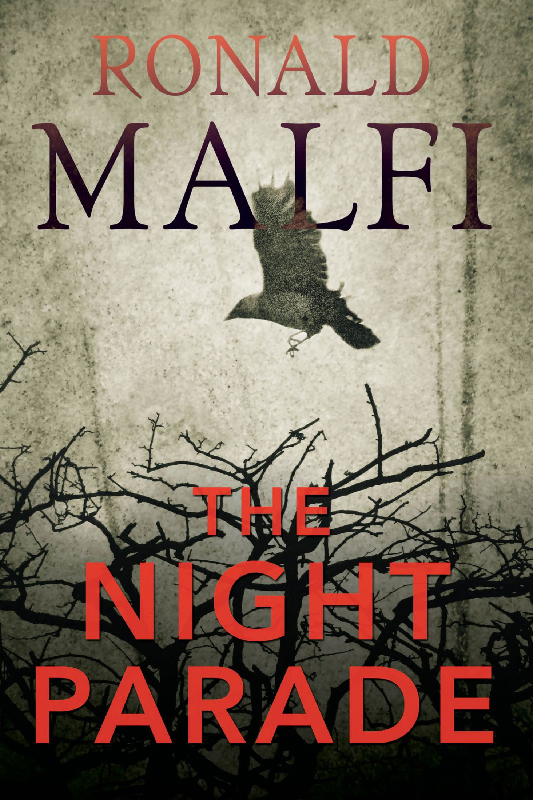
Malfi is nothing but consistent in prose and plot. For those who enjoy his more explicitly supernatural books, this is for you.
Summary
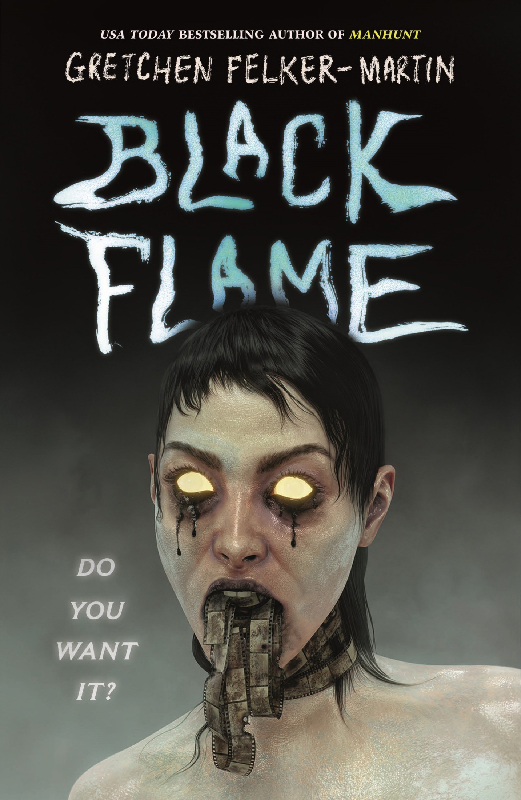
One woman's deadly obsession with a haunted archival film precipitates her undoing. A cursed film. A haunted past. A deadly secret.
The Baroness, an infamous exploitation film long thought destroyed by Nazi fire, is discovered fifty years later. When lonely archivist Ellen Kramer—deeply closeted and pathologically repressed—begins restoring the hedonistic movie, it unspools dark desires from deep within her. As Ellen is consumed by visions and voices, she becomes convinced the movie is real, and is happening to her—and that frame by frame, she is unleashing its occult horrors on the world. Her life quickly begins to spiral out of control.
Until it all fades to black, and all that remains is a voice asking a question Ellen can’t answer but can’t get out of her mind.
Do you want it? More than anything?
Review
I've never read a novel from this author. But I adore Cursed Films, so this I had to crack open. This one is for the dykes and the Jews. I can see why Felker-Martin has a strongly known name. The writing is amazing and the plot is impressive. I don't think anyone else can or should attempt it without such personal experience.
One thing I really loved was the echoes of betrayal. Major full plot spoilers.
My mistress’s realm is a realm of delights, but beware, traveler! There is peril here for the unwary....
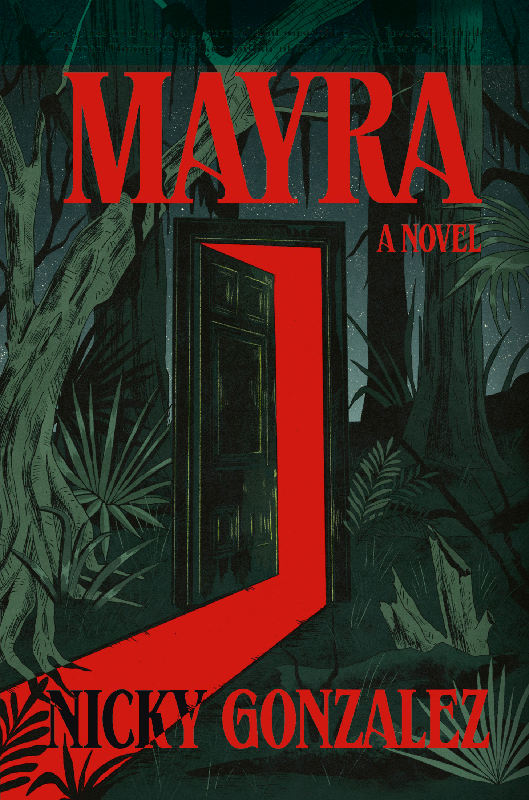
Summary
A haunting exploration of female friendship, desire, and memory set against the sultry backdrop of Florida's swamplands. It’s been years since Ingrid has heard from her childhood best friend, Mayra, a fearless rebel who fled their hometown of Hialeah, a Cuban neighborhood just west of Miami, for college in the Northeast. But when Mayra calls out of the blue to invite Ingrid to a weekend getaway at a house in the Everglades, she impulsively accepts. From the moment Ingrid sets out for the house, danger looms: The directions are difficult, she’s out of reach of cell service, and as she drives deeper into the Everglades, the wet maw of the swamp threatens to swallow her whole. But once Ingrid arrives, Mayra is, in many ways, just as she remembers — with her sharp tongue and effortless, seductive beauty, still thumbing her nose at the world. Before they can fully settle into the familiar intimacy of each other’s company, their reunion is spoiled by the reemergence of past disagreements and the unexpected presence of Mayra’s new boyfriend, Benji. The trio spend their hours eating lavish meals and exploring the labyrinthine house, which holds as much mystery and danger as the swamp itself. Indoors and on the grounds, time itself seems to expand, and Ingrid begins to lose a sense of the outside world, and herself. Against this disquieting setting, where lizards dart in and out of porches and alligators peek up from dark waters, Gonzalez weaves a propulsive, unforgettable story about the dizzying power of early friendship and the lengths we’ll go to earn love and acceptance — even at the risk of losing ourselves entirely.
Review
You know, sometimes horror is about a big scary monster hunting you down and eating you. And sometimes the big scary monster is growing up and away and out of friendships. This is lightly architecture horror, certainly gothic, and definitely general fiction exploring two women's friendship. It's an interesting look at a relationship that survived class and racial divisions, and still lingered despite a fair amount of physical distance.
The architecture isn't quite horror. It's weird, there's shenanigans a la Winchester House, but
A hard lesson to learn is that you don't have to stay friends with people when you aren't in forced proximity [such as high school], nor do you continue to have any overlapping interests. You can be acquaintances, sure. But friendship is something involving a deeper bond, as these two women will discover. It's a great book and I'd read more from this author.
If two mirrors face-to-face created infinite worlds, I thought, then two mirrors with their backs to each other formed a void, a nowhere.
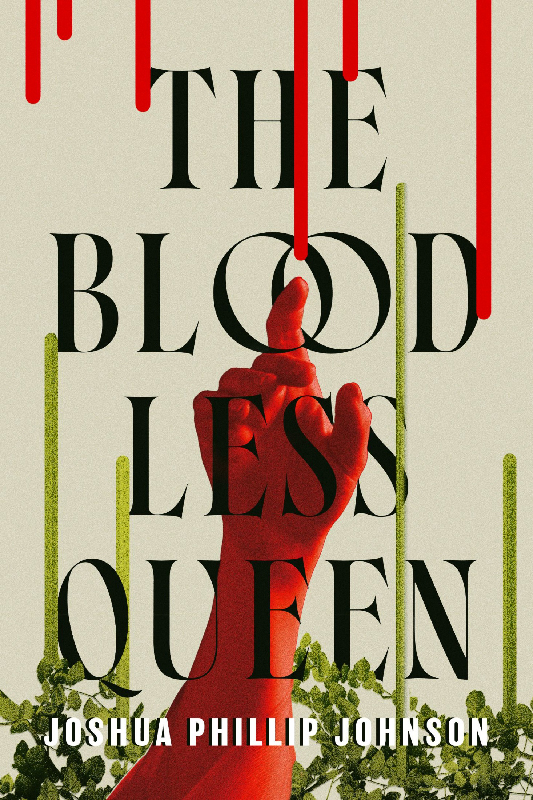
Summary
Part ecological Orpheus and Eurydice myth and part gothic thriller, discover this atmospheric near-future sci-fi novel about fae mysteries deep within strange nature preserves.
On the autumnal equinox of 1987, after fencing off half of the Earth’s land for huge nature reserves called Harbors, the leaders of the world called on their peoples to celebrate. Then began the horror and the magic.
Everyone who died that day—all 132,329 of them—instead of going cold and still, turned odd and fae. They became mischievous and murderous, before disappearing into their nearest Harbor, never seen again. And each year after that on the autumnal equinox, the same terrible transformations would occur: the wretched dead not dying, but instead riddling and whispering of a faerie queen—bloodless and powerful—while fleeing into the wild confines of the Harbors.
In the present day, Evangeline and Calidore are working as fencers, government-employed protectors whose magical powers come from mysterious tattoos of prime numbers. When they aren’t fixing the fences of the Midwest Harbor that separates the human world from Faerie or patrolling on the equinox, they are parents of an almost-seven-year-old daughter named Winnie.
But as the new year’s autumnal equinox approaches, Evangeline and Calidore find themselves thrust into a vast conspiracy that stretches across governments, religions, and fencers worldwide. As they race to untangle this web of power and intrigue, they will need to confront the questions that have haunted the world since the fences were built:
What lies at the heart of the Harbors? Who waits there?
Review
A universal sentiment that transverses social and cultural lines all across the world: there is a piece of art which one desires to experience for the first time all over again. This is one of those books. Oh shit.
First off, the whole summary blurb of ‘this is just like orpheus and eurydice!!!! greek myth regurgitators pss pss pss!’ is not really accurate. There’s absolutely no grecian elements that I could tell. Furthermore this is
Also gothic? Idk about that either. It's more political thriller than gothic, imo.
So. This book. Slow paced but methodical about it. It doesn't rush to the good parts [read: action, plot twists, etc] nor does it feel afraid to get to the point. Considering what we learned in the [Eternal] Pandemic, people don't react to worldwide catastrophes they were we think they would. There's a reasonable response in this fictional universe. Some decent, intelligent people shelter in place. Some other people of questionable intelligence / morals choose to become infected,
What else I liked is the main cast of family and their odd uncle. I think it pulled off the idea of underdog
Too many revolutionary plots are about the oppressed becoming the oppressor.
SIDE NOTE: I swear if the Fae queen is Nancy Reagan I'm going to shit in my hands and throw it, FAKE EDIT
SIDE NOTE 2:
▪ That’s what that fucking church was like today. Did you know that thing was built in the nineties? They’re so desperate for you to think they’ve been around as long as any ancient cathedral from Rome or Istanbul or whatever. All the dumb robes and carved sconces and arches and what-the-fuck-ever else. They’re playacting a history that isn’t theirs and probably doesn’t even exist.”
This resonates as a person of color.
I don't think it's intentionally but it carries vague ecofascism tones. That we need to cut off part of the world for nature to have and flourish in specifically without humans is ridiculous. I suppose the bloodless queen response to this is a refutation of this sentiment. Absent so far is the american indigenous perspective. Or perhaps I should be glad that a white author isn't intruding on a conversation of (types of reservations from a pretendian perspective). Ah wait, I’ve finished the book and sort of understand it. It’s not ecofascism per se, but colonization of / by an other. Which is a whole different can of worms which has spilled over and mingles with the ecofacism worms. Indigenous Perspective isn't really included here. I'm fairly certain these 'Harbors' probably forcible intruded on their lands, in North America and across the globe. Idk, while a lot has been going on in this book, I wouldn't have minded a little blurb about how Indigenous Nations were responding to this. Or hey, remember during the start of the [Eternal] Pandemic, First Nations were given body bags instead of vaccines and/or masks? At least do something equivalent of that.
Fae as an
The one thing I hate about this book is that it's a debut novel. I finished this and was raring to devour everything else from this author. NOPE! I just have to wait and hope there's something else from him.
And something, too, about primes being more than just numbers on a page. Mathematicians spoke of finding primes, but according to the trainings and some hushed conversations Evangeline had had with some administrators, including Oddry, that process was more than just writing the number down and verifying that it was a prime. It involved, she had learned, something like understanding the number’s true essence—something much more like finally seeing who a person was after years and years of knowing them. The mathematicians talked about these numbers as if the numerals themselves were only the door, and their correct arrangement the key. Everything interesting, everything that might be sought and caught, they said, existed through that open door.
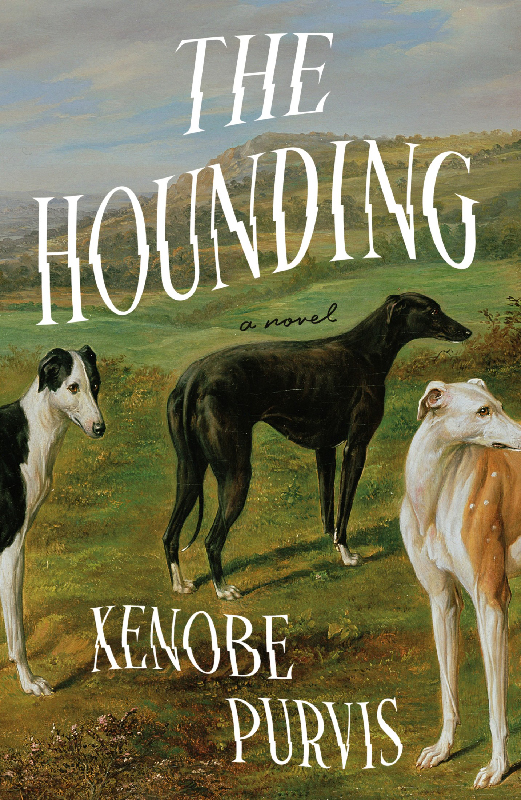
Summary
A haunting debut about five sisters in a small village in eighteenth century England whose neighbors are convinced they’re turning into dogs.
Even before the rumors about the Mansfield girls begin, Little Nettlebed is a village steeped in the uncanny, from strange creatures that wash up on the riverbed to portentous ravens gathering on the roofs of people about to die. But when the villagers start to hear barking, and one claims to see the Mansfield sisters transform before his very eyes, the allegations spark fascination and fear like nothing has before.
The truth is that though the inhabitants of Little Nettlebed have never much liked the Mansfield girls—a little odd, think some; a little high on themselves, perhaps—they’ve always had plenty to say about them. As the rotating perspectives of five villagers quickly make clear, now is no exception. Even if local belief in witchcraft is waning, an aversion to difference is as widespread as ever, and these conflicting narratives all point to the same ultimate conclusion: something isn’t right in Little Nettlebed, and the sisters will be the ones to pay for it.
Review
I generally hate general fiction. I don't want to read about other people's lives unless there's a trainwreck happening. This was lovely, nonetheless. Pretty prose, suitably historical flavored. A fascinating study of a small village; very metaphorical heavy on Gothic, not so much in horror.
Also very not metaphorical at times. The father being
And to answer the question in the summary: the girls
She seemed to know about hardship, how it crept into one’s life like a cuckoo, casting out happiness forever. Happiness was frail and flimsy: a petal, a whisper. Hardship was constant. It was muscular and loud. Only fools forgot this vital fact, her face explained. Only fools failed to let it guide their every waking thought and deed.
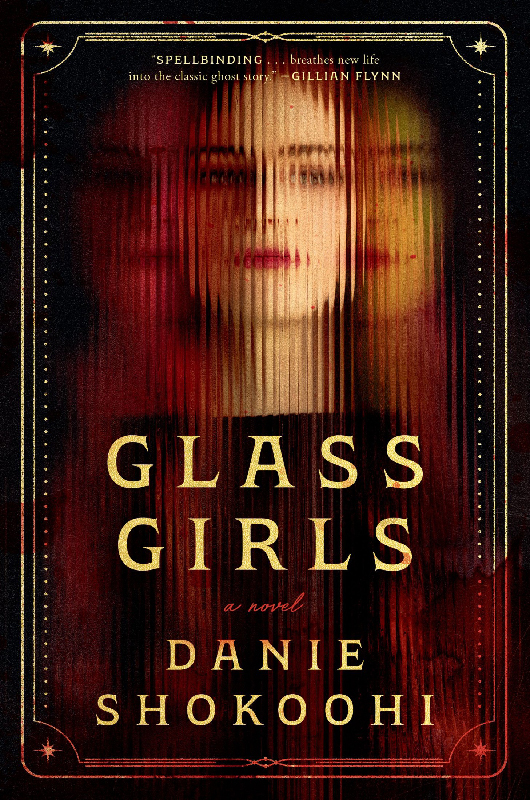
Summary
A former child medium is forced to face her deadly past and the ghosts she left behind in this electrifying debut.
Alice Haserot thought she’d escaped the curse. For sixteen years, she’s lived far from her family and the ghosts she used to conjure. But her past isn’t so easily left behind.
When Alice discovers she’s pregnant and her estranged sister, Bronwyn, turns up on her doorstep, her carefully built new life begins to unravel. Bronwyn offers an ultimatum: one of her daughters is trying to possess the other, and only Alice has the power to save them. If Alice refuses, Bronwyn will go to their abusive mother and expose her location.
Forced to confront the terrors of her childhood, Alice returns home to face the inheritance of her family curse. Tautly paced and gorgeously written, Glass Girls explores the deep, complicated bonds of family and the shadows that follow us, no matter how far we run.
Review
I'm constantly thinking to myself: I need to start a calibre Bookshelf for domestic violence / familial cycle of abuse.
Would that be tasteless? Maybe. Maybe not. It just keeps coming up. Totally not my fault. And horror wouldn't be the first genre to explore such topics. Glass Girls now joins the ranks of:
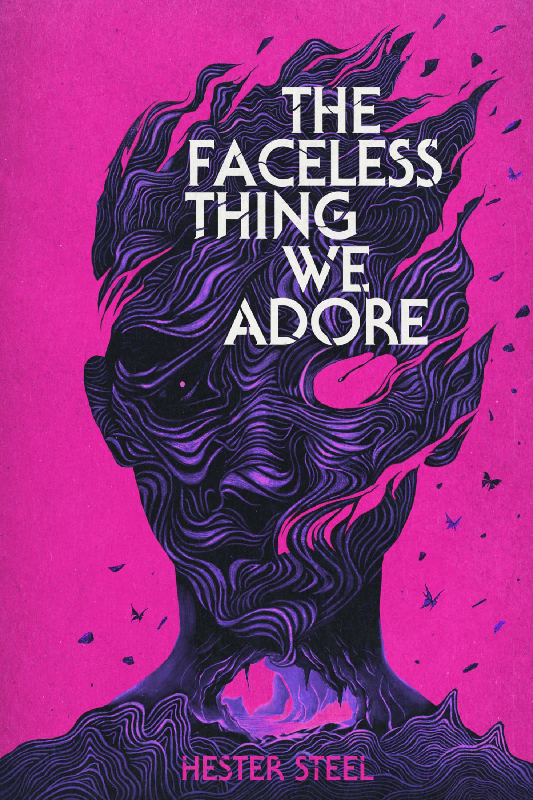
- The Faceless Thing We Adore by Hester Steele
- The Farmhouse by Chelsea Conradt
- We Live Here Now by Sarah Pinborough
- The Once Yellow House by Gemma Amor
- The September House by Carissa Orlando
The defined limitations is that it's focused on domestic violence with some familial abuse and exploring the societal norms
Glass Girls is phenomenal. You see both aftermath and then living situation, and are gifted a glimpse of a hopeful future. It's not grim and miserable, not always. Characters aren't resigned and wallow in their fate as a perpetual victim. Such plots always felt stagnant to me. The child characters feel like real children who are aware something is wrong and yet, because they're children, cannot figure out how to handle it. It's all they know, and so it's the only thing they can chose to love.
The summary is slightly misleading. See, their abusive mother is what tiktok pseudochologists [pseudo psychologists] call as 'boymom'. See. magic is real and for some reason that they don't know, there's a curse on their bloodline. Girls only. All male children die by the time they're 18, if not younger. Do not ask about trans women, this book doesn't cover it. If only because, like abusers will do, the mother intentionally cut off her own [allegedly abusive] family. So there's no way for the main character(s) to know. Anyways, guess what? They have a brother, which isn't when all the abusive shit starts but it's certainly takes main stage.
Most of the novel takes place in the present with some flashbacks to their shared childhood. I appreciate the realism of Alice also [not quite] mimicking their abusive mother's choice of cutting off her boyfriend in order to take care
It's very realistic for survivors of abuse, especially when you add in that magic is real and will be used to hurt you. Having to explain that to someone for whom magic isn't real, much less revealing just how abusive you family is? That's an ordeal and a half. And for once the romantic partner is someone self actualized and empathetic of his girlfriend.
I loved the inclusion of magic. Much like abuse, it's not considered 'real' even with evidence and most people don't even recognize it happening right before their eyes. It's a great metaphor.
While this was difficult to read, having explicit and repeated scenes of abuse, I'd recommend this. It's a strong debut novel and I look forward to more from this author.
The magic singing in her blood when the ghosts spoke to her, the exhilarating slide of ice down her throat, the golden shine of the candlelight on her skin, her control over the living. It was the only time she held any power, the only authority in the room—
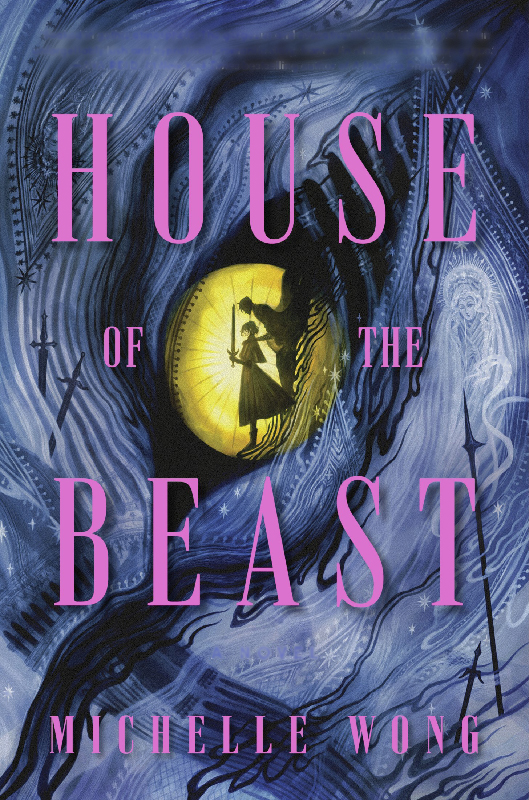
Summary
Step into the House of the Beast with this dark fantasy debut from The Legend of Korra graphic novel illustrator Michelle Wong – featuring illustrations throughout by the author.
You are a very lucky young lady, to be chosen by the Dread Beast.
Alma would not have chosen the Beast. But when her mother falls ill, she is not left with the luxury of choice. After all, luxury was never something they could afford.
Forced into a desperate bargain with her estranged father and his house, one of the noble families that serve the gods and wield their powers, she irrevocably binds herself to the Dread Beast, the most fearsome of the gods. However, it is a vow made in vain when death comes for her mother anyway.
Now vengeance is Alma’s sole aim. And she has a god on her side – a beautiful, eldritch monster with starlit hair. The Beast that has chosen her.
A darkly enchanting fairy tale with blood on its teeth, House of the Beast is a story of revenge, resilience, and the power of love to see us through the darkness – beautifully illustrated throughout by the author.
Review
On one hand I appreciate it's not a Duology. On the other hand tis seems so bloated with purple titles and lore that I just don't care. Author saw Bloodborne's purple gothic ye olde titling and took it as a challenge.
Fantasy that follows Christian religion is so boring. Woman, are you not of color?
Very video game. Not litrpg. Like dishonored fanfic, imo, but with the serial numbers heavily fudged like 50 shades of grey was a twilight fanfic. The author worked on atla so the tone makes sense. Kinda YA genre but for people who sort of know they're too old for ya and want something for older audiences but still has the same tired fanfic tropes.
Actually you know those TikTok adverts with the things like 'enemies to lovers!' and other trope blurbs around the book cover? That's this book.
Also you know those publishers who market some books as 'Qu**r Rep!' and it turns out it includes a minor side character who is the sassy gay sidekick who's there to have a fetishized kissing scene or have a hate crime done to them to give impulsion to the MC? That's what this book also feels like. Underdeveloped gay side characters. Which we're spose to care about because, again, 'Qu**r Rep!'. Like, it's toothless. Neon Yang did lgbt, non cishet default scifi fantasy world settings a lot better. The lgbt aspect in this book felt hollow and flat. [I still hate them for their spineless transmisogynistic bullshit about the 'helicoptor gender' short story debacle, though.]
I don't think I'm the audience for this.
blah blab blah
Summary
Pop had said a lot of things—not all of them nice or true.
A baton to the skull was Tom's welcome home gift after crash-landing into the Pacific Ocean. It was well deserved after daring to ask for water on that scorching, California boulevard.
But trigger-happy law enforcement, windshield-cracking heat, and an unassuming man with serial killer glasses and a taste for Vinyl records were the least of Commander Thomas H. Caval's worries.
The wailing was knocking on the cabin door, and he hadn't heard from Bill in days.
CHERRY KICKS RED MEAT is an apocalyptic horror story for fans of THE HAPPENING and NBC's HANNIBAL, and features a trans man protagonist alongside a majority lgbt cast.
Review
Short story. It was OK. Discordant. Not quite incoherent. I don't mean this in a disparaging way, but it sort of felt like a bunch of tumblr posts of short stories edited to flow together. Like, it was a bunch of scenes with sorta kinda a plot to tie it together. The summary makes it sound bombastic and it absolutely isn't. I don't think I'd read anything else from this author.
no quote because nothing popped out at me

Summary
One night, Jess, a struggling actress, finds a five-year-old runaway hiding in the bushes outside her apartment. After a violent, bloody encounter with the boy's father, she and the boy find themselves running for their lives.
As they attempt to evade the boy's increasingly desperate father, Jess slowly comes to a horrifying understanding of the butchery that follows them—the boy can turn his every fear into reality.
And when the wolf finally comes home, no one will be spared.
Review
I don't think I've ever read a Cassidy novel that I didn't love. I bet a lot of people by now have written screeds upon all the metaphors and themes, so I won't repeat all that. Suffice to say this another excellent entry into his bibliography. It's graphicly violent, it's heartfelt and touching, and it's shocking in its plot twists. The summary is much more simplistic than the plot, a convoluted mess of
The character parallels are fantastic. The way the MC has
▪ The cloud is made of mouths. Mouths opening to reveal mouths. Mouths within mouths. Mouths puckering every shadowy surface like sores on necrotic flesh. Mouths moaning in anguished harmony.
The supernatural body horror is great too. It rides that fine line of overly described and underwhelmingly minimal. And it's not just bodies which are unnaturally formed, but things like children's toys turned sentient.
All in all, Cassidy knocked it out of the park. Go read this.
(it hasn’t happened yet, but once it happens, it will always be happening and will never not have happened)
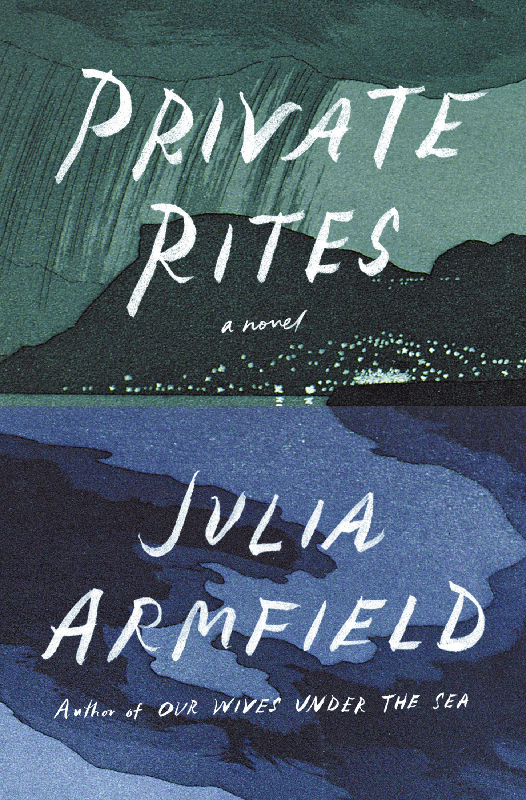
Summary
It’s been raining for a long time now, for so long that the lands have reshaped themselves and the cities have retreated to higher storeys. Old places have been lost. Arcane rituals and religions have crept back into practice.
Sisters Isla, Irene and Agnes have not spoken in some time when their estranged father dies. A famous architect revered for making the new world navigable, he had long cut himself off from public life. They find themselves uncertain of how to grieve his passing when everything around them seems to be ending anyway.
As the sisters come together to clear the grand glass house that is the pinnacle of his legacy, they begin to sense that the magnetic influence of their father lives on through it. Soon it becomes clear that others have also taken an interest in both his estate and in them, and that perhaps their inheritance may not be theirs alone.
Review
Note made at the start of this novel: These white characters are so tedious. This novel is only 239 pages but feels like 400,
spongebob narrator voice: one eternity later
Note made at the end of the novel: I've never been so mad at a book for wasting my time. It's just boring
still no quote for you sorry
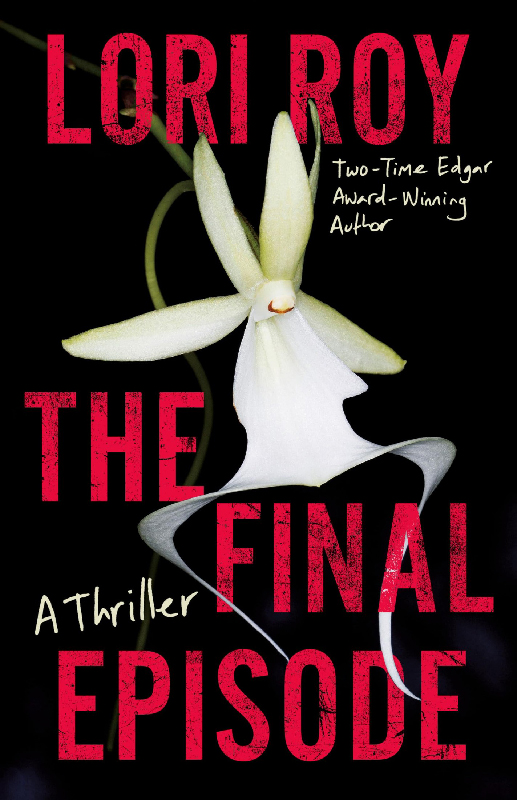
Summary
When a true crime series chronicles the tragic childhood summer that changed her life forever, a young woman must grapple with the truth about her father…and herself.
Jennifer Jones and her best friends spend every summer at Big Cypress Swamp, and this summer, Jennifer will finally turn eleven. She hopes to gain the “second sight” foretold by family legend and fulfill her destiny. Instead, the swamp serves up dangers greater than the gators lurking on Halfway Creek. Little Francie Farrow vanishes—and Jennifer’s father goes to prison.
Twenty years later, Jennifer has almost shed the label of Paul Jones’s daughter when her past comes barreling back. Inspired by True Events, a TV series that solves the unsolvable, is recreating that fateful summer. As the series plays out, Jennifer wonders: Did the show finally find Francie Farrow? And is Jennifer’s father truly guilty?
Someone else wants answers even more than Jennifer does, and they won’t let her forget it.
As the series nears its finale and the long-awaited truth, Jennifer must come to terms with who her family is…and what that makes her.
Review
Not horror though I don't think it was 'sold' to me as horror, per se. A ok murder mystery, post trial and judgement. Kinda
still no quote. too mad about the no horror shit.
Summary
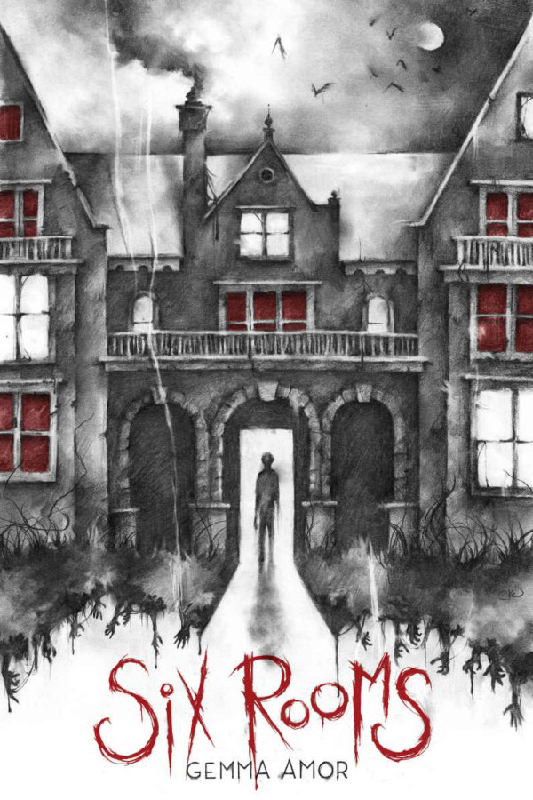
Welcome, all, to the Sunshire Chateau: Lestershire’s premier tourist attraction. It sits high on a hill overlooking town, shrouded by tall trees and rumors of murder, scandal and intrigue. Tickets are hard to come by, so hold yours close, else the Tour Guide may not let you in. And that would be a pity, for there are so many things to see within these walls–history, glamor, and riches beyond your wildest imagination. Just remember the following rules: don’t wander off alone, don’t be rude to the Guide, and don’t, whatever you do, touch the valuables. Because the ghosts don’t like it when you touch their things.
Review
Cheesy in a way that reminds me of phantasmogoria the video game. A bit shallow characters. Which, I suppose, makes sense in the context. Actually, I kind of reminds of the movie 13 Ghosts, if that's the one I'm thinking of. A bunch of ghosts trapped in a house, often
Summary
Excerpt from the editorial in The Journal of New Historical Perspectives, Vol. 3, #4, 2011:
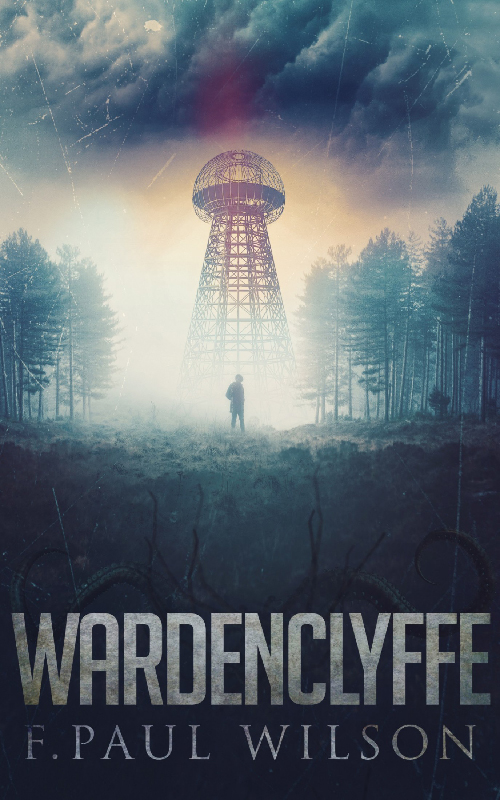
On the night of July 15, 1903, Nikola Tesla powered up his 190-foot tower in Wardenclyffe on Long Island's north shore. The bolts of energy radiating from the apical dome were visible as far away as New Haven, Connecticut. This was the first and last time anyone would witness such a display. Three years later, broke and unable to secure further funding, Tesla abandoned the Wardenclyffe tower and his dream of worldwide wireless power. He returned to Manhattan where he promptly suffered a nervous breakdown.
So say the history books.
But new evidence has surfaced that a shadowy fraternal order stepped in and provided generous funding after J. P. Morgan reneged. Witnesses state that testing of the tower continued but only on foggy days when the discharges would not be noticed. The final test took place on April 18, 1906. Around dawn, in heavy fog, the tower was charged to maximum capacity; across the Atlantic, in Abereiddy, Wales, two copper prongs attached to a 50-watt lightbulb were thrust into the ground. The bulb lit. Tesla had proved that worldwide wireless power was possible.
Why then, at the moment of his greatest vindication, did Nikola Tesla abandon his project? What could possibly have transpired at Wardenclyffe that day to so rattle him that he would deny the world his transformative technology? We may never know.
Review
Historical fanfic? I guess. The focus isn't too much
Summary
A FAST-PACED PSYCHOLOGICAL THRILLER DEEP BENEATH THE OCEAN’S SURFACE
A scavenger trapped in a defunct undersea train tunnel struggles to escape as his air supply—and his sanity—dwindles in this debut psychological thriller.
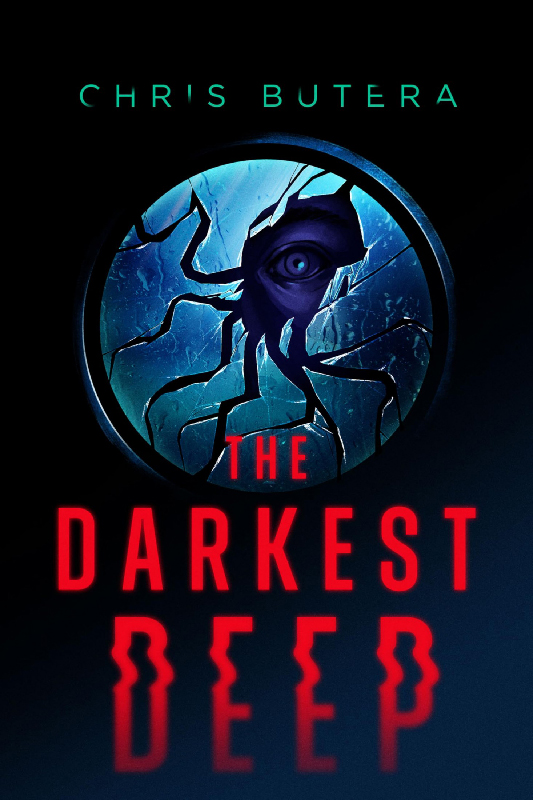
The Transatlantic Train Tunnel, connecting New York and London, was meant to be the next Wonder of the World. But after the disastrous maiden voyage seven years ago, it’s generated nothing but protests, lawsuits, and bankruptcy. The only traffic the tunnel sees these days is scrappers harvesting its useless remains before it’s fully dismantled.
Not everyone is willing to take a tedious job one hundred and fifty feet below sea level, but Ben Breckenridge doesn’t have a choice. He needs the money, and the work will help quiet his anxieties. That is, until one of the bulkhead doors mysteriously locks, trapping him inside.
With limited air supply, Ben must race deeper into the tunnel to find a way out. Yet the farther he goes, the more his mind disintegrates. To survive, he’ll have to reckon with the monsters in his head. Only then will he be able to face the actual monster that’s now hunting him down.
Review
Good plot twists, didn't like the
Inspired by, or at least adjacent to space horror and ocean horror, the darkest deep isn't terrible. It's got tension which sags at times, a decent enough antagonist which may or may not be real, and plot twists. Unfortunately the plot twists relate on rather stale tropes. Comic book fans will feel exhausted at the recognizable
You can see the Iron Lung and Subnautica influence. Creepy
I did like the realism of it. The MC is miserable, slogging in a deteriorating diving suit that may very well kill him if the environment doesn't get to him first. That capitalists would think making a intercontinental transport tube would resolve world tensions instead of, you know, dismantling capitalism was very realistic.
My main dislikes is the plot twists for the climax.
Well. It was an ok read. The author does have skills and talent to create a coherent story. I'd give him another shot with future works. I would love to see growth.
Summary
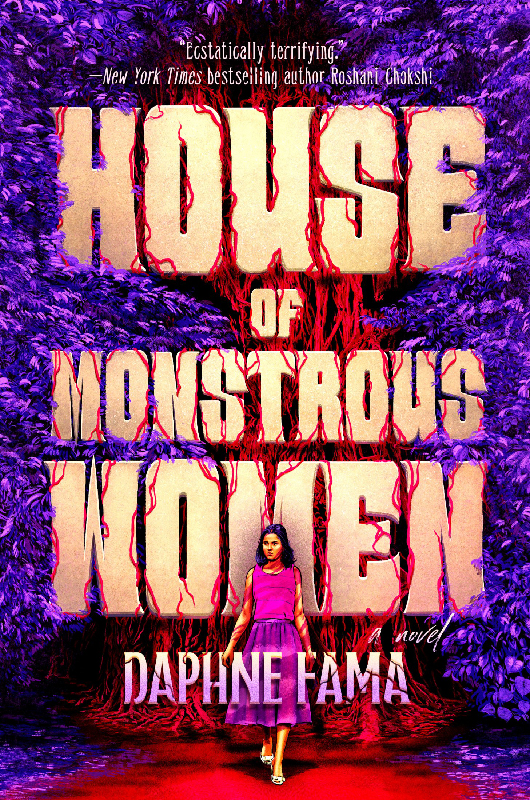
A young woman is drawn into a dangerous game after being invited to the mazelike home of her childhood friend, a rumored witch, in this gothic horror set in 1986 Philippines. In this game, there’s one rule: survive. Orphaned after her father’s political campaign ended in tragedy, Josephine is alone taking care of the family home while her older brother is off in Manila, where revolution brews. But an unexpected invitation from her childhood friend Hiraya to her house offers an escape.... Why don’t you come visit, and we can play games like we used to? If Josephine wins, she’ll get whatever her heart desires. Her brother is invited, too, and it’s time they had a talk. Josephine’s heard the dark whispers: Hiraya is a witch and her family spits curses. But still, she’s just desperate enough to seize this chance to change her destiny. Except Ranoco house is strange—labyrinthine and dangerously close to a treacherous sea. A sickly-sweet smell clings to the dimly lit walls, and veiled eyes follow Josephine through endless connecting rooms. The air is tense with secrets and as the game continues it’s clear Josephine doesn’t have the whole truth. To save herself, she will have to play to win. But in this house, victory is earned with blood. A lush new voice in horror arises in this riveting gothic set against the upheaval of 1986 Philippines and the People Power Revolution.
Review
I know this is shitty, internalized misogyny, but a lot of Asian women authors [or women authors of color] will write very similar plots of mother daughter cycles of abuse and generational expectations. Which is great, love that they are unpacking that in the horror genre context. I can relate to that. But I kinda uh. I kinda sort get tired of that plot of Mommy Issues the novel. Again, probably internalized misogyny. There's some parental issues here, but they aren't the focus, thank fuck.
The Philipines, like many other colonized countries, are a mess. There's revolutions and politics and coups and naturally interference from First World Countries. Thankfully that's not the focus of this book either. This isn't a YA Genre love triangle of young revolutionaries that overthrow the government only to install themselves as dictators. But I digress from that point. My point is, there's a lot of potential for those settings, and this author nailed it.
Yes, the MC is from a fairly wealthy family. But wealth doesn't mean safety, not always. The MC is empathetic: well meaning and hopeful, but not stupid enough that she can't see through the scales on her eyes.
There's a cycle of abuse going on here, and how trauma from that echoes throughout relationships. MC's mother entered into the bargain of wish fulfillment which led to death. Which led to the MC's brother trying to traffic her into forced marriage because that'd be easier than realizing his Sisyphean choice of trying to follow his father's life path. And Hiraya chooses to accept the role of matriarch because she believes if she's the head abuser [so to speak] then she can choose who to hurt and who deserve it, and most importantly, spare her lover from abuse. Sometimes it's easier to choose to go along with abuse because escape abuse is either lethal or impossible to achieve. And of course, the background of political upheaval echoes this. Interspersed is radio blurbs of what is going on in the distant big city, and the political violence happening there. In a sense, it's also parallel to the current abuse happening in the mansion. It's easy to see what is right and wrong from afar, but impossible while you are in the situation.
Speaking of forced marriages: LESBIANS. Yes there's lesbians in this book, and yes they get a happy ending. Hell, while they never say the word lesbian, it's made very clear they are romantically and sexually attracted to each other. Which is the main impulsion for the MC. To save not just herself, but Hiraya. It's also a nice echo of the MC's mother and Hiraya's mother's relationship. They were also involved, and while I forget if it was lesbian, it adds weight to the cycle of abuse theme.
Oh and for the whites who see Horror of Color and get spooked because 'there's nothing relatable [read: white] for me to relate to! [read: I can't empathize with anything not white]'? Don't worry. There's a part where the cosmic god monster turns the previous matriarch into a tree, a la Daphne escaping whatever his name is. So you can pretend it's a generic Greek myth retelling. Or just kill yourselves. Idc.
One last thing: I think a favorite subtle but notable part of the book was the lighting. When they get to the mansion where the contest will be held, it's always dark and poorly lit, if at all. Darkness is safety, it's good, it's protection. It's only when the contest starts do the hallways and rooms get lit up. That makes it easier for monsters to find them, and harder for them to hide. I love the reversal of Dark = Evil and Light = Good. It does make me insane to constantly see dark = bad and light = good. Usually it's in the context of physical appearance. Darkskinned people are bad, usually foreign savages that the lightskinned people need to defeat in order to preserve the future of the lightskinned race. [that's not 14 words, but you get the white supremacist reference, yes?] I know, I know, the lighting of the mansion isn't racial, nor of physical appearance. But it's the same concept and it's such a relief and joy to see. The dark is good, it's safe.
I think it's a very subtle, well written gothic horror novel. I put it on par with September House by Carissa Orlando. A novel that tackles cycles of abuse and personalities that lean towards abusive behavior that do need to be unlearned and defied.
The thought of such a life intrigued Josephine. She’d struggled to imagine a life where she woke up every day beside a man. But seeing the dawn’s light falling across Hiraya’s face? To learn the way she liked her coffee, to learn the titles of the books she loved the most, to slowly uncover the ways to make her smile? That had its own charm, the way playing house with a man did not.
Summary
Not all hauntings are confined to houses With the mounting terror of the German Blitz on London in 1940, thousands of British “guest children” are sent abroad to escape the bombing. Among them are Michael and Frances Hawksby, who are shipped off to Canada to stay with relatives. Years later, as WW II finally comes to an end, their surviving family members realize that no one has heard from them since. Randall Sturgess wanted to do his part in the war but was forced to stay home to look after his troubled and unstable younger brother, Edward. Impoverished, shamed as a coward, and running out of work options as veterans return home, Randall takes a job investigating the disappearance of the Hawksby children. Reluctantly leaving Edward behind, Randall follows the children’s trail to the wilds of northern Ontario, where he finds an isolated and ramshackle resort called Glass Point Lodge. Here he discovers the secretive aunt and uncle who took in the young Hawksbys, along with an odd collection of seemingly permanent guests, none of whom seems willing to tell Randall the truth about the missing children. Plagued with vivid nightmares about the war, and troubled by dark visions and a persistent feeling that he’s being watched, Randall searches the imposing woods and lake for any trace of Michael and Frances. Convinced that something terrible has happened to them, Randall delves ever deeper into the mysteries of the lodge, its inhabitants, and the long-buried memories of his childhood, not realizing that the darkest secrets he unearths may be his own.
Review
The Crevasse by Clay Vermulm novella handshake emoji The Guest Children = FUCKED UP BEARS.
It's a compliment when I say this would make a great survival horror video game. And not just because the Robby Rabbit from Silent Hill is just like the teddy bear in this novel. It has vivid imagery and a fascinating glimpses of otherworlds. The plot twists are fantastic. I love that the creeping dread it so layered. It's not just people traumatized and stuck in a routine of eternal waiting. They are trapped in a self defeating cycle, and
All in all, a very atmospheric and dreadful horror mystery.
Summary
Isla Hansen, a mother reeling from a devastating loss, is beside herself when a mysteriously orphaned child appears on the outskirts of the Hansens’ secluded Colorado property. Although strange and unexplainable, the child’s presence breathes new life into Isla. But as the child settles in, Isla’s husband, Luke, and their five children notice peculiarities that hint at something far beyond the ordinary—anomalies that challenge the very fabric of reality itself. The tension within the Hansen household grows, and with it, the sense that there is something very wrong with the new kid in the house.
The Unseen is a haunting tale that walks the line between the familiar and the unknown, drawing us into a chilling narrative where reality itself feels just out of reach.
Review
Sits down hard. Ok. OK. Phew. OKAY. Have you ever watched the
The
This is so well done. The sinking dread of realizing you're witnessing a trainwreck, but all the characters aren't far enough away to see in hindsight. The crawling sensation of paranoia infecting you as all the family is forced to their breaking points. And the sheer helplessness of it all. A lot of times authors don't know how to hurt their fave characters. This isn't one of those times. While this isn't tortureporn, I'd liken this to the first Saw movie. The absolute helplessness of being put into a situation and coming to the realization that nobody is coming to help you. And that nobody is coming to stop this. I'll be honest: I got my hopes up
This is a beautiful, well constructed trainwreck. I loved the monsters. I absolutely did not expect fucking
Summary
People come to visit my home and I love to show them around. It's not the original house of course. That was destroyed the day my entire family died. But I don't think their ghosts know the difference.
Pera Sinclair was nine the day the pilot intentionally crashed his plane into her family's grand home, killing everyone inside. She was the girl who survived the tragedy, a sympathetic oddity, growing stranger by the day. Over the decades she rebuilt the huge and rambling building on the original site, recreating what she had lost, each room telling a piece of the story of her life and that of the many people who died there, both before and after the disaster. Her sister, murdered a hundred miles away. The soldier, broken by war. Death follows Pera, and she welcomes it in as an old friend. And while she doesn't believe in ghosts, she's not above telling a ghost story or two to those who come to visit Sinclair House.
As Pera shows a young family around her home on the last haunted house tour of the season, an unexpected group of men arrive. One she recognises, but the others are strangers. But she knows their type all too well. Dangerous men, who will hurt the family without a second thought, and who will keep an old woman alive only so long as she is useful. But as she begins to show them around her home and reveal its secrets, the dangerous men will learn that she is far from helpless. After all, death seems to follow her wherever she goes...
Sinister and lyrical, The Underhistory is a haunting tale of loss, self-preservation and the darkness beneath.
Review
This should've been two books, what with the flashbacks and flash forwards. Long. Meandering. Not bad, I just didn't like how drawn out it was. And I get the author was trying to build tension. Oh no, poor elderly woman in danger, how will she survive? Well whatever. Probably not horror genre. More suspense and domestic psychological sprinkled on top. Or gothic, I guess. It's certainly about rich people.
Summary
In the course of assembling her thesis, Minerva uncovers information that reveals that Tremblay’s most famous novel, The Vanishing, was inspired by a true story: Decades earlier, during the Great Depression, Tremblay attended the same university where Minerva is now studying and became obsessed with her beautiful and otherworldly roommate, who then disappeared under mysterious circumstances. As Minerva descends ever deeper into Tremblay’s manuscript, she begins to sense that the malign force that stalked Tremblay and the missing girl might still walk the halls of the campus. These disturbing events also echo the stories Nana Alba told about her girlhood in 1900s Mexico, where she had a terrifying encounter with a witch. Minerva suspects that the same shadow that darkened the lives of her great-grandmother and Beatrice Tremblay is now threatening her own in 1990s Massachusetts.
Review
This bitch is always horny for sexy incest, which is why I don't read her shit. And to no one's surprise: sexy incest plot! Anyways, good book, well written, slow paced. Cool flashback and flashforwards rotating pov. The dread was well constructed. The finale was pretty cool. If you like her other books, you'll enjoy this too.
ps the cursed manuscript had very little to do with the plot. Don't go in expecting the focus to be on that.
This, then, was the world I inhabited, spending my days flitting between classes and my leisure time sitting by the pond reading a book, playing checkers in our common room, or joining the other girls for a movie night in town. This was an innocent world, insulated from strife. It was a world of light.
Summary
In Martin Cahill's "The Angel's Share," an exciting work of original fiction for Reactor, a woman hires an exorcist to clear an infestation of 32 angels who think they're helping her. (They are not.)
Review
It's always fascinating to see the concept of angels, but negative. Not malevolent like fallen angels. Maliciousness as a side effect. In this case, of good intentions. Yeah it's a metaphor and plot point of surviving child abuse. I think it was artfully done and wouldn't mind reading anything else from this author.
Summary
What is the greatest trick of all—survival or disappearance? How far would you go to find out? In the heyday of Atlantic City, a man determined to rise above his circumstances and make a name for himself in a world hostile to people like him, finds his calling in the art of illusion. In the present day, two friends pretend to be interested buyers to gain access to the house where a famous magician once lived — before mysteriously vanishing. Once the night falls, all secrets will be revealed... to those who dare cross the threshold of Alakazam. GO ON, SAY THE MAGIC WORD! How far would you go to change your life? How far would you go to uncover a decades-old secret? In an abandoned house, built by ambition and sustained by dark magic, fates cross—and past and present bleed through. One deadly night. One trespass. Finding the way in was easy. Leaving it alive will take a hell of a trick.
Review
Novella albeit on the short side of under 100 pages
The
The haunted house is alright. I guess it's a twist on
Ok see as I see.
Honestly, I'm making this deeper than it really is. The novella is
Summary
From T. Marie Vandelly, author of the acclaimed horror novel Theme Music , An Evil Premise is a mind-bending, thrilling meta-novel about possession, insanity, and the lengths a writer will go to find inspiration. When a bizarre accident leaves her sister, bestselling author Deidre Baldwin, in a coma and suffering from a grotesque skin malady, Jewel rushes to her bedside. Though the sisters are not close, she is determined to do what she can for Deidre. Staying at her sister’s apartment, Jewel stumbles upon an unfinished manuscript, the one that Deidre was rushing to complete for her publisher. When Deidre’s literary agent calls in a panic, Jewel—a self-published writer herself, desperate for a break—suggests she can finish it by the deadline. But the story is unsettling. It begins with a writer looking for inspiration, who finds an unclaimed manuscript. But said manuscript is just a series of protagonists who feel compelled to act out their heinous contributions to the grisly plot. Jewel is determined not to be scared off, but the novel hits a little close to home. She tries to tell herself she’s being paranoid, but swears she can hear someone typing when she’s not at the desk, and somehow the word count of the novel keeps going up. Her skin begins to itch. Terrified of losing her sanity, but equally terrified of losing her one shot at success, Jewel tries to find a story somewhere in the carnage, even as her rash becomes worse and she starts to have not so neighborly thoughts about her neighbors. Is this what happened to Deidre? Did the manuscript drive her mad? Infect her somehow? Jewel finds herself hoping her sister never wakes up. And fearing what will happen if Deidre does …
Review
This novel sure is self aggrandizing. Or self aware, if I'm being kind. I didn't like this. I didn't like Theme Music [the author's other book], and while I don't remember the specifics of why I disliked it. I do remember I simply didn't like it, even 5 years after reading it. That is certainly an impression. That's not to say I was biased. I did want to like this book. It's just that certain parts [a lot of parts] made me dislike it.
Idk if it's the alleged meta part of the book, but how
Ok I'll be vaguely honest here: I'm crazy. I got the 'tism. I got the diverging neuro. So the way I read books is definitely not the same way others read them. The way that this
And ok, I know, I get it. To build tension and have enough rope to tie a noose, there needs to be reason to prolong why
It's a good book. The plot was well done, the concept of a cursed manuscript didn't feel like a tired retread of many other similar plots. I liked the
I also didn't like the plot twist of
The author can do plot twists very well. I honestly was not expecting the reveal of
Well. I don't think I enjoy this author, through nothing / nobody's fault. They can write excellently, it's just not for me. I do recommend the novel if it seems appealing to you.
Summary
When the faces in the walls start watching you back, how far would you go to escape your demons?
Kalen Lambey is a recovering addict haunted not only by his past, but by the figures he's conjured since childhood—the Line People. These mysterious faces and shapes emerge from the patterns in walls, ceilings, and floors, offering comfort and guidance when real people cannot.
As Kalen reaches his first year of sobriety, supported by an unconventional therapist and a budding relationship, his old habits threaten to resurface. The Line People, once his secret protectors, grow increasingly insistent, blurring the boundary between imagination and reality.
Torn between the familiar comfort of his "special friends" and the promise of a new, healthier life, Kalen must choose which obsession will ultimately claim his soul. Through vivid storytelling and psychological depth, The Line People delves into the nature of faith, trauma, and the strange ways our minds fight for survival.
With echoes of supernatural horror and literary drama, this short read will unsettle, intrigue, and linger with readers long after the final page. Who can you trust when your greatest enemies—and allies—might only exist inside your head?
Review
Pacing is a little. Uh. Convoluted. Very tell and not show. Overeager to
Summary
Lilly had tried to put her life behind her. She'd left the city and moved to a small mountain community, but ends up stumbling onto murders and disappearances all around her. Is there a killer on the loose, or is something far more sinister going on? Making her doubt her sanity, something is in her house. Something she can't see, but knows is there.
After narrowly escaping, she encounters Jake. This dual-narrative novel is told through both Lilly and Jake's perspective.
Review
The author is former military, which made me automatically hate it. At the end, I didn't. I just didn't care for it. It was like a
The monsters were... there. It was interesting.
Actually you know what this reminds me of? It's a prequel. Specifically to those non supernatural apocalypse novels / series where it's essentially copaganda or military propaganda or god, what's the word. Those packrat survival hoardings with the 2000 cans of baked beans but no non electric can opener. Those freaks who think they'll survive, idk, the Taliban invading Nowheresville, OklaHioBamaNessee. Because they got shelf stable food and a rack of guns, this means they're totally spend the post society apocalypse with a harem of cishet white able bodied women who lust for his survivor's knowledge [aka his wee wee] and thus the white race future is secured.
Ok ok I'm not accusing the author of being a white supremist. This is on par with those 'cottagecore girlies' on social media who don't interrogate why they want to 'reject modernity' and colonize lands to do cozy activities like harvest 10 stalks of wheat to grind in their 10x10 ft micro gardens for a 1/4 cup of flour.
Anyways. A nonthreatening novel featuring cishet able bodied whites in a 100% white rural town who
Summary
K. J. Parker returns to the amoral world of Prosper’s Demon with a wry, sardonic novella that flips the eternal, rule-governed battle between men and demons on its head. An anonymous representative of the Devil, once a high-ranking Duke of Hell and now a committed underachiever, has spent the last forever of an eternity leading a perfectly tedious existence distracting monks from their liturgical devotions. It’s interminable, but he prefers it that way, now that he’s been officially designated by Downstairs as “fragile.” No, he won’t elaborate.
All that changes when he finds himself ensnared, along with a sadistic exorcist, in a labyrinthine plot to subvert the very nature of Good and Evil. In such a circumstance, sympathy for the Devil is practically inevitable.
Review
"like Deadpool meets the witcher geralt' from the blurb on the book cover which should have been my sign to not read it. Good book. Good plot twists. I don't think I'll ever read another from this author. I don't think I like the funny goofy style, is all.
Summary
The sixth warlock of Hua sacrificed herself in a treacherous bargain, leaving behind her daughter to be raised by a demon... and her wife to deal with a household that has one infernal butler too many.
Madhuri, now mistress of the Hua estate, grieves for her lost warlock and grimly avoids the creature that’s keeping her daughter alive. But they are full of surprises—they want to serve her in her lonely widowhood… and perhaps, slowly, court her for their own.
The Demon of the House of Hua is an F/NB gothic novelette (15,000 words) that explores the history of the Hua warlock line, and can be read as a standalone.
Maria Ying Maria Ying is both a fictional character and the joint pseudonym of Devi Lacroix and Benjanun Sriduangkaew, who have challenged themselves to write fiction with no speculative elements for once.
Review
Didn't hate it. Didn't especially like it, either. See, I read this out of order, having read 'The Grace of Sorcerers' after this one. It's very.... I can't decide if it's superficial or serendipitous. A mix of both, let's say. This was more of a slow courtship, which I appreciated. I don't by the instant love plot point. Not when it's accompanied by a series of conveniences.
And now that's not necessarily a bad thing. It's a romance fantasy novel. Lovers will conveniently fall together and make love and face terrible obstacles and then triumph and make love to celebrate their survival. That's just what romance genre is for. Wish fulfillment and sexy fantasy.
The child character wasn't too irritating.
It was alright. If the rest of the series is like this, I don't think I'd enjoy reading it.
Summary
The world's best ghost hunters, the town's most haunted mansion, what could go wrong?
A debut sample from the forthcoming Tales From Cemetery!
The Old Mayor’s Mansion sits just a few miles outside the town of Cemetery.
When best friends Sean and Devon want to increase views on their ghost investigation channel, they know the mansion is the perfect spot to film.
Armed with a slew of new equipment, the buddies set out to capture the paranormal hotspot that will make them famous—just maybe not in the way they were hoping.
Review
"A debut sample from the forthcoming Tales From Cemetery!"
Well, I'm sold. Interesting, MCs not irritating despite being youtubers. Didn't like the
Summary
Gary can't read. But he can dream. With his REM machine, he controls his sleep, living out dark repulsive fantasies that make his bleak existence bearable. When Gary unexpectedly wins the lottery—and learns he's dying—everything changes. His mysterious neighbor Lana offers to teach him to read using her own writing: visceral, brutal stories unlike anything Gary has experienced. As he devours her words, his lucid dreams intensify in ways he never imagined. But Lana's stories come with a disturbing price. Some demand more than just a reader. And some prices, once paid, can never be undone. Would you give up everything to live a dream? He might, but that's Just Gary.
Review
A bit... try hard. Superficial splatterpunk. Attempts a plot twist but didn't run fast enough to clear the bar. It was ok. I don't think I'd read anything else from this author.
Summary
Lightning flash imposed over a stock image of a graveyard. The colours of the graveyard invert and the lighting flashes again. The show theme song starts, played on theremin. Stock footage of Kevin from previous episodes cycles on screen.
In an oversaturated market of paranormal investigation shows, Modern Hauntings is not doing well. After multiple attempts to keep things fresh and exciting for the viewers, the crew finds themselves facing possible cancelation before their fourth season has even begun. Their next stakeout is at the old Harper place in Galeston, a farm with a dark and twisted history, and show host Kevin Shae will do anything to get a ratings worthy episode. Camera operator Jackie Pierson hopes to capture perfect footage on this investigation, not just for the show, but for her career. The network wants to transfer her to a different program, and she's aching to go – whether Modern Hauntings survives or not. But will she and her fellow crewmates survive the night?
Review
Cursed film, it ain't. This is a slasher splatterpunk novella with heavy emphasis on medical horror. Frankly, medical horror isn't my thing. And that it involves the very stale trope of
It slightly redeems itself. It's got a
The writing is decent, pacing alright. The 'monster' is, as I said, boring and predictable. I suppose it's interesting how we get there, but once we do there's no where else to go.
However, trans women may not want to read this as it does involve transmisogyny and does not have a decent ending for the trans woman character. Mind the content warnings. Or if you want explicit spoilers, here's what happens. <ch>Everyone dies. The trans woman character, who is repeatedly misgendered and deadnamed, gets captured by the evil ghost doctors. They 'prescribe' her castration for being a trans woman while misgendering her, with the intent of torturing her to dead. </ch>
I guess read this if you like splatterpunk or really, REALLY need to read the author's entire bibliography.
Pops and cracks reverberated throughout the barn and into Kevin’s ears as the cow’s mangled body rearranged itself further. Udder side up, the legs contorted, spider-like, to point down as its opened ribs stretched upwards. What was left of its organs spilled over its sides. What didn’t fall to the ground hung limply, shuddering with each bone-breaking contortion. The head twisted around until the eyeless sockets pointed up and the purplish tongue lolled down. The moo that came from its lips sounded more like a pained scream.
Summary
Six teenagers entered the abandoned subway station. Only one came out.
March break is not going according to plan. After a night out with friends, one teen wakes to find they are the only one who made it home that night. And a visit to the police leaves them with more questions than answers. Now, with a head full of disembodied whispers, they're on the hunt for information on a little-known urban legend. All the while, their friends fight to escape the bowels of the seemingly endless subway tunnel. Will anyone get out in time or unscathed? And what does the tunnel want with them?
Review
Tunnels aren't very common a locale in horror. Especially not as a focus of the novel. I can think of only one that I've personally read that features a tunnel as haunted or a locus of something cosmically horrific. [It's Dead End Tunnel by Nick Roberts, by the way.] This is a bit of both.
I know a repetitive comparison would be the ubiquitously known
It's also not quite a purgatory plot. We see the
There's some seriously eye rolling
Being a novella worked in the author's favor. It did not overstay it's welcome, nor did the gimmick wear thin with excess and repetitive torture porn.
The tunnel wasn’t quite as interesting as they’d hoped it would be. It should have been something from a horror movie, filled with the bones of supposed bodies that construction crews kept finding over the years. But it was just like any other subway tunnel you could see if you looked out the window of the train. And the fact that they weren’t moving though it at high speeds meant more time to focus on the dirt and disappointment.
Summary
After a year of hardship, Cass and Jade are ready to put it all behind them. With the help of Cass's mother, Vera, they're finally able to move into a new home and get that fresh start they so desperately need. Most importantly, the new environment will be perfect for raising their rambunctious daughter, Willow.
But when October comes around, so does Skull Daddy. After displaying this new Halloween decoration in her room, Willow becomes obsessed with the thing. She cares for her new imaginary friend, and in return he shares his dark secrets with her.
Surely, this is just a harmless game of make believe. Or is it? Thanks to their daughter's never ending obsession with Skull Daddy, and the horrifying gifts he brings, Cass and Jade are about to find out just how dangerous a Halloween decoration can be.
Review
This is the book I expected Black Wings by Megan Hart to be like.
Featuring two married women and their daughter, the novella dives straight into it. A black ram skull, claimed by their daughter. The pacing is excellent. We slowly devolve from odd but harmless to barely suppressed dread at this entity taking over their lives.
I liked the complexity
It does not overexplain either, which is welcome. It's a demon, obviously, who cares about the specifics of ranks and litrpg type shit? Demons do bad things, so let's see that shit instead of its family tree.
I think this author is someone to watch for. They are very good at splatterpunk but can handle horror without the tortureporn.
Summary
The metaphysically disorienting tale of a female captain who loses control of her thinking—and her crew—aboard a cargo ship in the Atlantic.
A female captain in a male-dominated field, the unnamed narrator of Ultramarine has secured her success through strict adherence to protocol; she now manages a crew of twenty men and helms her own vessel. Uncharacteristically, one day, she allows her crew to cut the engines and swim in the deep open water. Returning from this moment of leisure, the crew of mariners no longer totals twenty men: now, they are twenty-one.
Sparse and psychological, Ultramarine grips the reader in a tussle with reality, its rhythmic language mimicking the rocking of the boat. As instruments fail, weather reports contradict the senses, and the ship’s navigation mechanisms break down, Navarro lulls her readers into accepting the unacceptable through deft, lyrical prose and pared-down dialogue. In Eve Hill-Agnus's poetic translation, Mariette Navarro emerges as an exciting, mature voice in French literature.
Review
Not horror. Literary. Still interesting. A study on grief as horror genre novels can do, but again, not really horror. I suppose there's sort of scifi esque terror of
Nonetheless beautifully written and I enjoyed it very much. I'm glad to have read it, and I'd like to read more from her. Hopefully there's further translations of her works.
They trace a circle on the surface, and it’s as though they took the sea to be paper, their arms to be their childhood compasses. They don’t ask themselves what’s below: they only seek the perfection of the circle and to dive into its center. They imagine the concentric waves their tiny human bodies will produce. They believe that they can plunge into a mirror without being engulfed by the swell, that they can disappear to the side of the world where light no longer shines.
Summary
8114 is a terrifying horror novel investigating the mysterious death of a high school friend through an embattled podcast and hallucinatory hauntings at the abandoned house of his childhood.
After returning to his hometown, Paul, the beleaguered host of a small-time podcast, discovers a longtime friend committed suicide in the dilapidated ruins of Paul's childhood home. Desperate to find answers, Paul interviews friends and locals hoping to find closure. He finds himself in a chilling downward spiral of his memories and the land he grew up on. Has his past caught up with him or is there something far more sinister at play?
Joshua Hull, screenwriter of Glorious, brings an edge of horror film expertise to this story of small-town haunting, trauma, and grief that just won't let go. 8114 roots out the rot of a small town's past and unravels the memories we must face to survive the present.
Review
The about the author page: Joshua Hull is an author, screenwriter, and filmmaker based out of Indiana.
Well that explains some.... everythings. Like why some words are randomly BOLDED for EMPHASIS. Or the random speech in italics.
I think this would've worked better as a film. It wasn't great but it wasn't bad either. Well not that bad. My standards for bad is not that high.
The novel feels like water and oil. All these plots and ideas and concepts and not quite melding together. In the novella, Mouth, it wasn't as egregious. Mouth was intentionally black humor. This is black humor but not well done, to me.
It's fairly realistic you have this
Book tone: cheesy B-Movie but with heart not quite comedic action horror, emphasis on unseriousness.
This is sort of slasher genre except not slasher as there's no solo murderer and everyone dies off screen. Literally why the fuck did I write that. Ok. It has the tone of slasher genre, the lighthearted, goofy, 'the blood is obviously watered down ketchup' tone. People die but
Superficial but not in a bad way. It's enjoyable. A beach read but above that just a little.
I just didn't like it. Maybe I'm not the audience for it. Maybe I went in with the wrong expectations and couldn't pivot fast enough to enjoy it. Maybe this is actually high concept dissembly of the horror genre and I just don't get it. Well. Someone else can enjoy this.
Summary
Sliced Up Press is delighted to present its debut anthology, featuring sixteen sweetly sinister stories.
Grab your fork and dig in to tales of tiered cakes and teary eyes, plump currants and sinister undercurrents, all-consuming hunger and bizarre gluttony. There's something for all tastes here, though you might think twice before ordering dessert...
TOC
Tres Leches by V. Castro
Glut by E. Seneca
The Tea Party by Stephanie Yu
Grind Your Bones by Douglas Ford
The Perfect Bite by Tiffany Michelle Brown
Black Teeth by Sam Richard
The Crumb Reader by Jackson Nash
An Old Fashioned Type of Girl by R.J. Joseph
Authentic Experience by Risa Wolf
Legs Of the Dead by Liam Hogan
Tiers by Belinda Ferguson
Eater of Universes by Madison McSweeney
One Year Anniversary by Red Lagoe
The North American Guide to Animal Slaughter by Nicole M. Wolverton
Mrs Betty Briggs and the Angel Food Cake From Hell by Kelly Robinson
The Ritual by Benjamin Franke
Review
A fun variety, a little safe, but enjoyable as a gimmick themed anthology. Fave story: The North American Guide to Animal Slaughter by Nicole M. Wolverton
◆ Tres Leches by V. Castro
Major
◆ Glut by E. Seneca
Major
◆ The Tea Party by Stephanie Yu
Major
Medium
◆ Grind Your Bones by Douglas Ford
Major
Medium
◆ The Perfect Bite by Tiffany Michelle Brown
Major
◆ Black Teeth by Sam Richard
Read elsewhere, n/a
◆ The Crumb Reader by Jackson Nash
Major
Medium
◆ An Old Fashioned Type of Girl by R.J. Joseph
Major
◆ Authentic Experience by Risa Wolf
Major
◆ Legs Of the Dead by Liam Hogan
Medium
◆ Tiers by Belinda Ferguson
Major
Minor
◆ Eater of Universes by Madison McSweeney
Medium
◆ One Year Anniversary by Red Lagoe
Major
◆ The North American Guide to Animal Slaughter by Nicole M. Wolverton
Major
◆ Mrs Betty Briggs and the Angel Food Cake From Hell by Kelly Robinson
Major
Minor
◆ The Ritual by Benjamin Franke
n/a

Summary
The mad and mystical Körn Society, based in Ticino, Switzerland, sets itself the task of building a grand, soul-uplifting Meeting Place for its members. An inspired architect, a visionary in stone, must be found, and one such is available: the mysterious and unpredictable Alexius Nachtman. But is he perhaps too visionary? This is the effect of his book of sketches: “Huge edifices, megastructures, poured from the leaves. Bridges which spanned oceans, towers which stretched into the clouds, huge fortresses which looked as if they could withstand the destructive force of an Armageddon. Vertical cities rose up from desert plains in startling anaxometrics, while spatial cities, cities built fifteen or twenty meters above their counterparts, stood forth as visions of utopian architecture, only to be outdone on subsequent pages by floating cities, vast nests of hexagonal pods resting atop lakes and oceans. Structures which straddled the earth and others which burrowed under it. Buildings which brought to mind lost civilizations or seemed to be the habitations of beings from another world … ” Despite doubts, he is hired. And so, in this adventure of marble and mortar, of machines and workmen, of cult and manipulation, the most bizarre construction project since Babel commences its Cyclopean growth. Written by a contemporary master of the decadent and grotesque, The Architect is like Greek tragedy on hallucinogens—a brilliant, stylish short novel of eccentricity and decay.
Review
I can tell if it's an intentional satire of fascist? White eurocentric pseudo spiritualism. Or if the author is a white cishet man.
OK yeah it's satire. PHEw.
Very fun satirical trainwreck of rich people making up a self important cult to themselves and getting scammed the hell out of themselves.
If you enjoyed Banksy's movie 'Exit Through The Gift Shop' then you'd like this.
And so it is that the more desperate men become, the more wild are their dreams. Shunning the world around them, ignoring the blue skies and singing streams, they look for beauty in some great beyond, their diseased minds crippled by stupidity, their senses perverted by occult mechanisms.
Summary
A heavy metal music festival held at a cursed mine in the middle of the Northern Canadian wilderness sounded like the perfect way to spend an August long-weekend to Jack Fiddler, drummer for the headlining act and experienced stage technician, and his childhood friend Sarah Medley, tour manager and concert promoter.
After all, the curse never caused them any issues throwing bush parties at the mine back in high school. It's all just superstitious locals and morality tales passed down after the atrocities committed there when the town was founded. That is, until the curse is breathing down their necks.
Review
I'd describe this book as weightless. Or no, perhaps unmoored would be a better word. It doesn't know its
Essentially, the book lacks the ambiguity needed for tension and fear.
"The book gets points for having specific pale skinned monsters." This is what I wrote before knowing the monsters were supposed to be w*nd*go monsters. Why are they pale skinned if they're supposed to be indigenous people? Are they supposed to be white people turned into monsters? There's not much to support this. See, the main villains
Side note: don't ask what 'tribe' the local indigenous people came from. The book never says, nor does it indicate where in north America it's set in. [sarcasm] At least they aren't from the ubiquitous Rez which is schrodingerly located all across north america as its needed to be.
The plot feels lopsided. Like a fraction too much build up and not enough in the build up to create tension or suspense. The climax is some
I think it'd help if, perhaps,
Where was I? Ok.
The ending is dumb to me. Sorry but why are y'all renaming your band to w*nd*g*? Are any of you even indigenous? Eternal Hunger is still a pretty badass name. It also feels like nothing from that event had an impact.
PS why does the W monster have antlers? IT doesn't fucking have antlers. It's a winter starvation human turned monster. Humans don't have fucking antlers. Suck the shit straight out of my asshole.

Summary
A novel following a couple whose search to spice up their sex life leads them down a path of madness. A kink-fixated couple, Carmen and Blanca, have been in a rut. That is until Blanca discovers the enigmatic Smoke in an under-street drug den, who holds pages to a strange play, The King in Yellow. Read too much, and you’ll fall into madness. But read just a little and pull back, and it gives you the adrenaline rush of survivor’s euphoria, leading Carmen to fall into a game of lust at a nightmare’s edge. As the line blurs between the world Carmen knows and the one that she visits after reading from the play, she begins to desire more time in this other world no matter what horrors she brings back with her. Bram Stoker Award–winning author Hailey Piper masterfully blends horror, erotica, and psychological thriller in this captivating and chilling story.
Review
There's some comparisons to a tv show and eric larocca which,,, idk. Never saw euphoria and never read that author. Who is a man, afaik, so why are you comparing her work to a man's? Because they write about lesbians? Idc if they're both lgbt, what are you doing? Don't do that. At least find another lesbian or trans woman author to compare a lesbian trans author to. Sniffs. Well I digress.
Can she ever disappoint? Like can Piper ever fail to deliver something interesting and captivating and fascinating? If you love King In Yellow mythos, you'll love this novel. If you love women, you will love this novel. If you love horror, you will love this novel. I am grabbing you by the throat. Read this novel.
When you gaze long into an abyss, the abyss also gazes back into you.” She reclined against Blanca and smoked again. “The way I interpret that, the abyss gazes because even an abyss can be lonely. And if it sees you looking, it might start to wonder if you like it, I mean really like it, and it might grow fond of you in return.”
Summary
The short story A Hole in the Switch that marries Bunker Dogs to On a Clear Day You Can See Block Island, and shows the thread running through Tanner's Switch.
Review
It was ok. The new short story, I mean. Which is probably something cool and interesting in the larger scheme, but I haven't read any of these novels since they came out. The effect is lost on me.
Summary
From the international bestselling author of Baby Doll comes a post-apocalyptic mystery exploring the unshakeable bond between mothers and daughters and the sacrifices we make for the people we love.
If you knew the world was ending, what lengths would you go to protect the people you love? How would you ensure their survival? And what secrets would you want to stay buried?
For Olivia Sullivan, the summer of 2024 was the beginning of the end. Political upheaval and natural disasters were bad enough, but danger arrives on her doorstep, threatening her triplet daughters, Olivia finds herself scrolling doomsday-prepping forums for hours determined to protect her family from the coming apocalypse. Olivia’s husband and friends insist she is being irrational, until she is swept away in a flash flood that devastated LA.
At least that’s the story her daughters, Rosie, Bettie, and Cassie, were always told.
Twenty years later, the triplets discover a box of their mother’s belongings that calls into question everything their father told them about their mother and her death. Reeling from this betrayal, the family returns to California, determined to uncover Olivia’s true fate.
Confronted by an unfamiliar world where nothing and no one are what they seem, the sisters must unravel the truth about their father and the mother who may have abandoned them, while struggling to hold onto the one constant in their lives—each other.
Review
Cool tense beaten endearing but not saccharine touches on heavy topics but does not linger
Well that was neat. I can appreciate women oriented fiction. While it's not too heavy on the backstory-
Though it is kinda hilarious in a cottagecore way that these people somehow
WAIT I GUESS THAT MAKES SENSE. They're gone from
While there
Would I recommend it? It depends what you're looking for. A missing person mystery with a change of setting, sure. It'd be familiar enough that it's comfortable and unchallenging. If you want a mystery in a distinctly scifi setting, no, not this book. There's no ray guns or Mad Max roving gangs, or other such action sequences. It's a lot of talking, actually. Not much detective work, either.
Summary
It was supposed to be the party of the century: miles of idyllic white sand beaches, lush jungle foliage...and a dark legend nobody dreamed might be all too true.
When an online influencer and several hundred of his most loyal fans land on Prosperity Island, the plan is simple: five days of elaborate games, drinking, and suntanned fun.
A week in paradise should have been a welcome respite. The only survivor of an infamous cult, Ruth wants nothing more than to keep her head down and not draw attention. She's spent decades outrunning her blood-soaked childhood, and her identity is a closely held secret.
But then the true history of the island is revealed...along with its sinister connection to Ruth's past. As guests go missing and games turn deadly, Ruth and the rest of the attendees are forced to question whether they've really been invited to paradise...or whether something much darker―and far bloodier―is waiting for them just beyond the bonfire's light.
Review
I'm accidentally on purpose harsh on Coates. It's just that, to me, she's the sort of author that writes consistent beach reads. Neither superficially, poorly written novels. Nor particularly deep, convoluted plot novels. She's a bag of potato chips writer. You know you're going to get something forgettable but enjoyable. That's not a bad thing. I've read about 10 of her books because I enjoy that sort of thing.
I suppose it's the length of this novel. Or maybe, due to its length, a little more depth can be woven into it. If you're ever read a book and understood its subtext, you can guess where this book is going.
Ruth is a survivor of a cult. Specifically, a
The cult isn't the focus here, though there is discussions of the abuse that happened. Actually the cult in question wasn't the only commune which was active on the book's island location, and there's discussion of the trauma perpetrated during those times as well. Which I think lends depth and tension to this book as opposed to other Coates's books. There's room for more backstory. Not that her other books are lacking for it. They're well paced and constructed stories in their own right.
There's obvious connections to be made to the real life FYRE Festival, Dashcon, and other influencer based, Idea Guy type festivals which inevitably blow up. This is like those, but isn't a rip off or reference to them, fyi. Yeah there's contests where certain attendees can participate. And that's where things start to go downhill.
Coates is very good at building tension and drama. It's a fantastic read, following along every domino tipping over. If you like suspense, action, supernatural, cult horror, this is for you.
This is a dark facet of humanity: Whenever a peaceful flock grows large enough, wolves begin to sneak between the tender bodies.
Summary
Unfolding through fourteen short stories and one novella, DARK WORLDS WE WANDER offers a fresh take on Earth's last, desperate survivors who will do whatever it takes to keep from starving through a nuclear winter; a woman trapped in her laundry room who battles something terrifying in the clothes dryer; a convicted criminal who picks up an odd companion on his lonely walk to prison across a desert planet; a woman whose new tattoo suspiciously multiplies like an alien virus; and more.
From the most crowded cities to the loneliest reaches of the galaxy, in the now and in the future, exploring humankind's darkest depths and noblest aspirations, DARK WORLDS WE WANDER is a trip not to be missed.
TOC
Imprints
Tumble
Being From Another World
Meat
Lost Classics of the ‘90S
Sojourn
Fly
Fallen
The Nyx Effect
The Editor
Bitty
Digestible
Blunder
Rabbit
Maze
Review
A good variety of stories showcasing the author's talents and skills. I'd be interested in more from this author. Fave story: The Nyx Effect.
◆ Imprints
Major
◆ Being From Another World
Major
◆ Meat
Major
Medium
◆ Lost Classics of the ‘90S
Major
Medium animal death, gore,
◆ Fly
Major
◆ Fallen
Major
◆ The Nyx Effect
Medium
Minor
◆ Bitty
Major
Minor
◆ Blunder
Major
◆ Rabbit
Minor
◆ Maze
Major
So as I walk, I look at the frost, at the bare trees. I listen to the quiet. I hold my silver buckle up to the sky and watch the dim, hopeful refraction of light. And I wonder, when it’s my time, if I’ll run. Or if I’ll choose to find the beauty in the world, the meaning.
Summary
A break magic for a living. Unfortunately, rent’s still due—and the Agency just offered me a job I can’t refuse.
Cal Drexler is not your average magical freelancer—mainly because he’s technically illegal. Officially, he’s a “breaker,” someone who shuts down rogue enchantments for a fee and maybe a cinnamon roll. Unofficially? He’s a morph, capable of absorbing and redirecting magic… a skill the Shamrock Disposal Agency classifies somewhere between “extremely rare” and “kill on sight.”
So when rent’s overdue and a gig chasing bakery sprites nearly gets him turned into a glowing muffin, Cal’s luck seems about standard—until the Agency shows up on his doorstep. Not to arrest him. To hire him.
Now partnered with a suspicious field agent who has zero patience for Cal’s improv style, he’s getting dragged into magical gallery heists, fae-forged crystals that sing like springtime, and a conspiracy that could shatter the balance between worlds. All while pretending he’s just another charming burnout with a bag of herbs and a winning smile.
But magic has a way of revealing the truth. And the Agency’s idea of “consulting” may be more lethal than unemployment.
Review
Kinda bog standard urban fantasy. You got the snarky male underdog character, soft cold mysterious potential love interest and partner. Magic police which are basically the slave catchers and enforcers of normality. Also standard plot twists. Not particularly challenging, plot or theme wise. Also very white. I can see why they are a ny times best selling author. It's very broad and harmless. Interesting but ultimately low stakes and very relateable pop culture characters.
I put down my sandwich, appetite gone. “So we’re what—the magical equivalent of mixed-race kids that nobody wants to acknowledge?” “More like the descendants of ancient royalty that both sides want to either control or eliminate.” He took a bite of his sandwich, chewing methodically. “The Courts both fear what might happen if morphs ever realized their full potential.”
Cringe, dude.
Summary
Elpenor, a newly minted private investigator, finds his first case on Craigslist: twenty-nine people have entered an abandoned trailer in rural Indiana, and none of them have left. Unable to open the trailer's doors or windows, Elpenor enlists two local accomplices, a knife grinder (Don the Knife) and a janitor (Hugh Gardener). When they finally gain access, they fall into a pocket universe ruled by a godlike being called Fiascoal. Refugees of this world—a depopulated and exact copy of our world—congregate around a web of communities in St. Louis. Elpenor attempts to find the missing people but is instead forced to become the new host of Fiascoal as a communal ritual. His search for the missing in the netherworld and the needs of the hungry, petulant god conflict as Don the Knife raises a cult of personality, community leaders abuse their authority, and Elpenor must decide whether to save the few over the many. That is, if he can find a way out of the metaphysical prison he's broken into. Told in a charged high-rhetorical, hard-boiled style, Enter the Peerless is a detective novel for the paranoiacs and heartsick rejects who know an angel in the dirt when they see one.
Review
The summary is barely touching upon the weirdness. What follows is a long strange yet coherent acid trip. You have, vague plot spoilers separated by commas, cosmic gods and their baby sitters,
There's violence. There's a cult and desperate situations, so naturally there's violence. Not splatterpunk levels of cringy, over the top [usually misogynistic] violence, though. It's well balanced between investigation, holding patterns while ingesting new information, and trying to survive in a glass bottle of a world.
I'd suppose this is horror with a fantasy element if you squint. It's not wizards and dragon fantasy, but a more modern, urban kind. There's no magic that's recognizable as such. No spells nor tiny fairies. But there is a madman wizard, of sorts.
Maybe call this weird fiction with a horror / fantasy element. It's hard to classify, strictly. If you read Grasshands by Kyle Winkler, the moron who still thanked known serial rapist neil gaiman in his acknowledgements page in the year 2024, you'd probably enjoy this book. I enjoyed it immensely and I would love to read more from this author.
If a god made you the way you were, then that god holds responsibility. If you weren’t, then we agree it was genetics. You are the way you are for causes that precede you far beyond knowingness down to the decisions eventually made by small mammals thriving in the underbrush. Ask yourself: why does a man kill another man for no reason? If it is not to protect his life then what for? Evil? But what is that? Is it because this man’s brain was constructed in such a way as to malfunction against the practices and rituals of the kind he grew up among? And if that’s true, then why do humans punish so blithely? It is as I said. Even if a god gave you this, that god is owed to another.